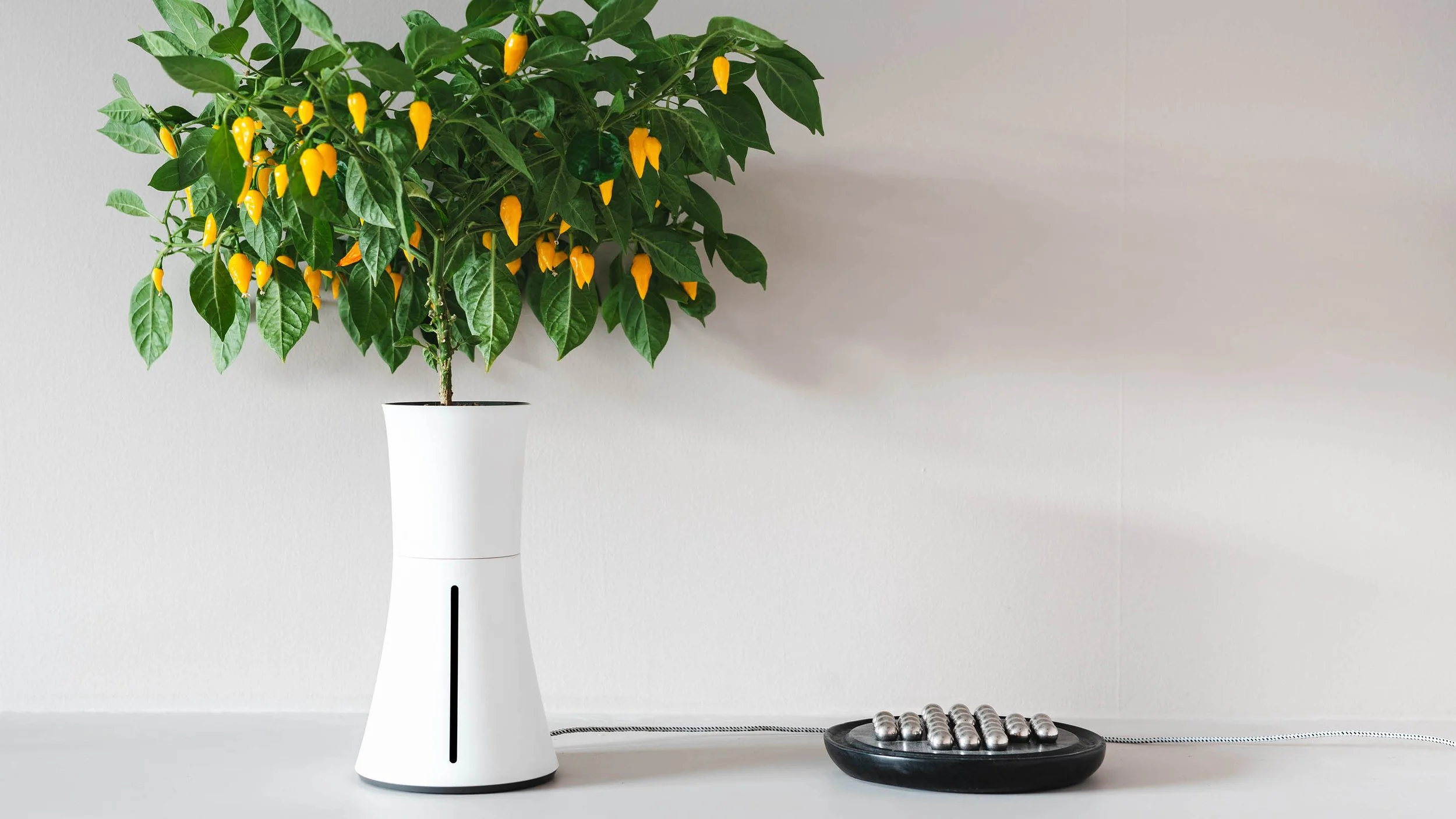
Botanium
2016-2017
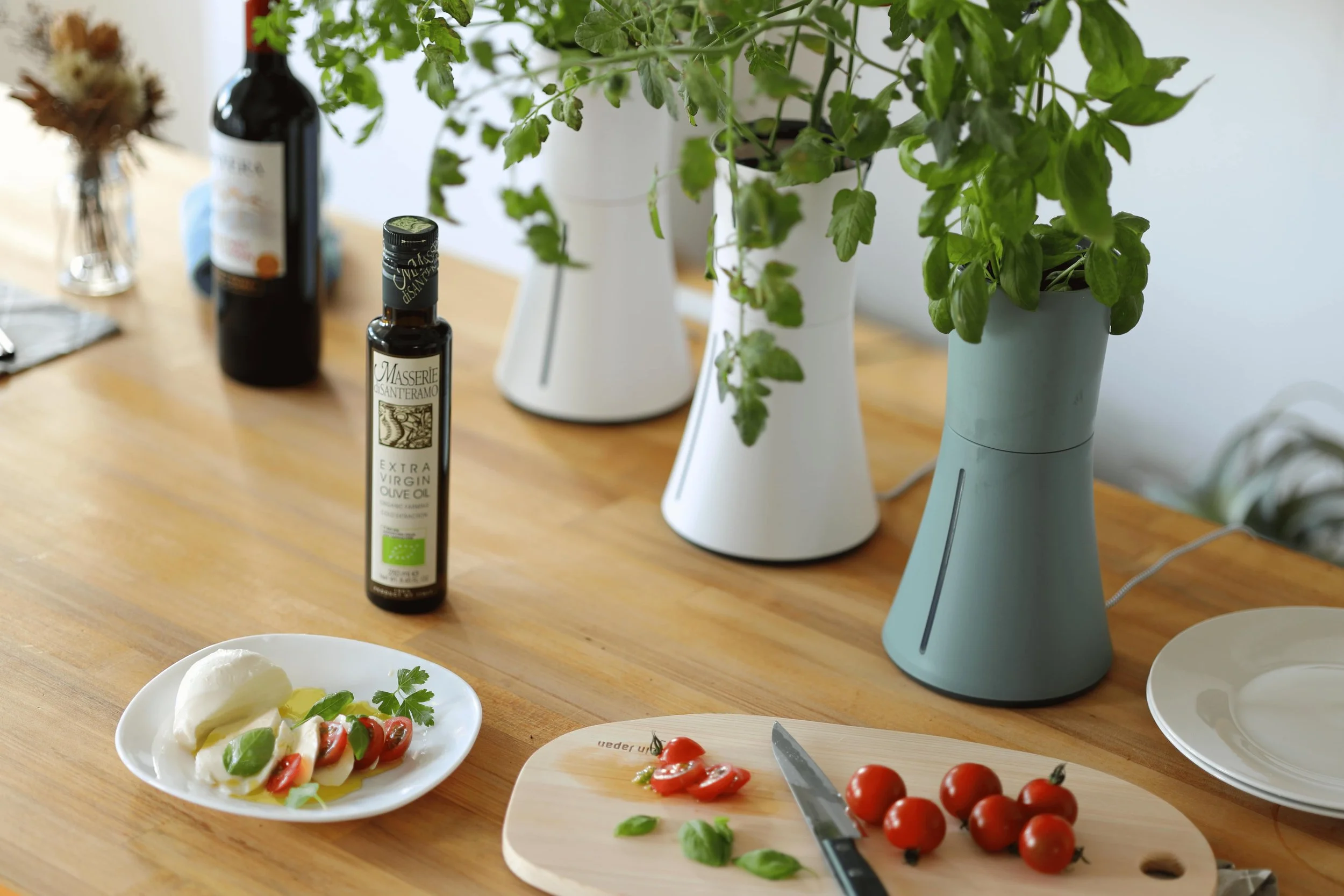
As a co-founder and head of product of Botanium, I combined my indoor gardening interest and love for creating products when the self-watering planter called Botanium was created.
What started as a hobby project of mine turned into a company that sold over 30 000 units along with accessories for indoor gardening.
I did product design, marketing material, and have been involved in packaging and graphic design as well as being involved in manufacturing and business building.


About Botanium
Founded in 2016, I was one of three founders. Botanium was a technology company founded in Stockholm with a passion for creating innovative products that enable everyone to grow their own food without compromising their modern lifestyle.
Botanium strived to accelerate and simplify urban gardening, enabling everyone to be a grower.
Indoor gardening: Problems and opportunities
-
![]()
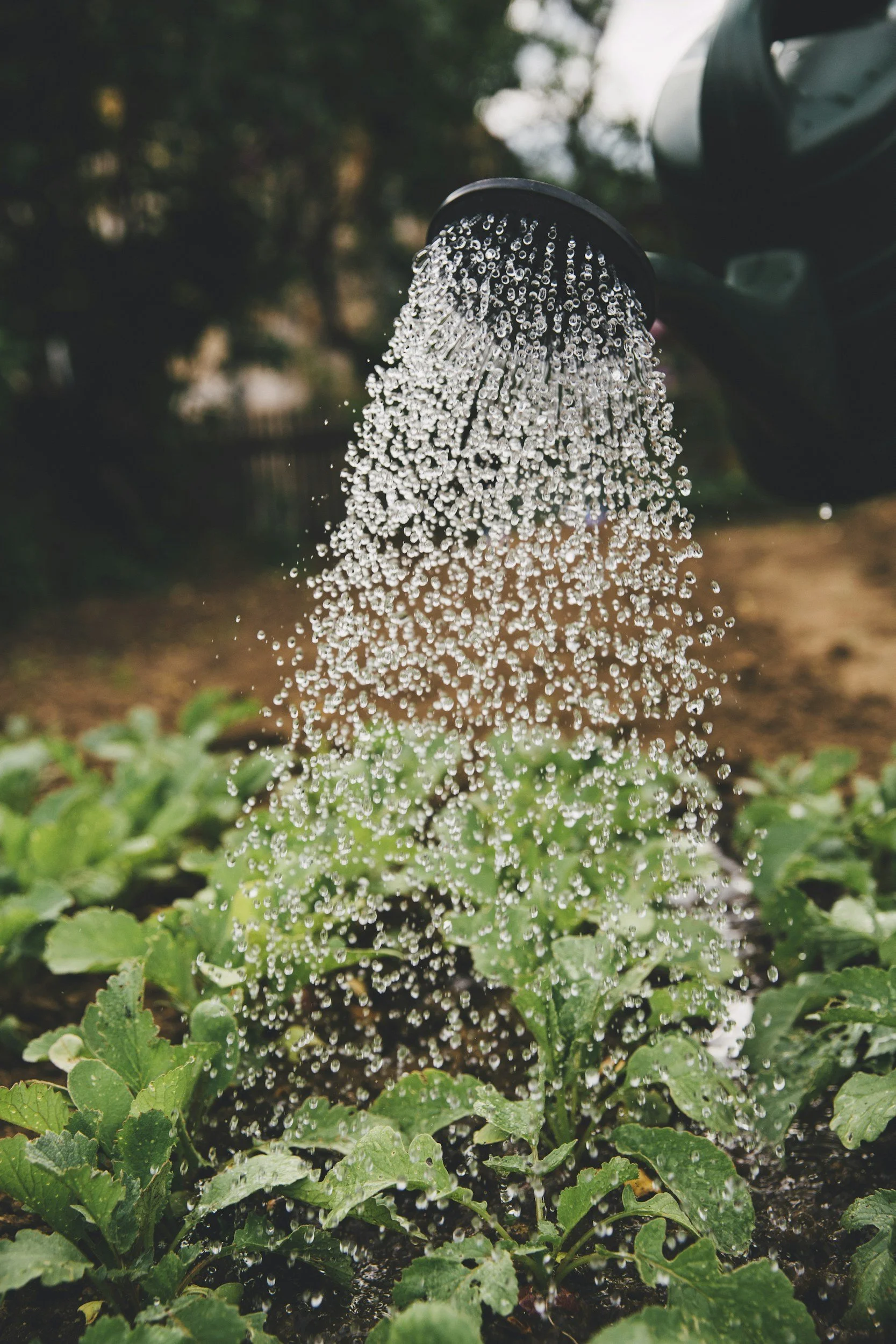
Needs water, but not too little or too much
Giving house plants too little or too much water can both make them perish. This balance can be difficult to make sense of, unless you have gardening skills.
-
![]()
Requires presence
Since plants can’t go long without watering, you can’t leave them for too long. If you go away for a period, you either need helpful neighbours, or plants that are adapted to desert environments.
-
![]()
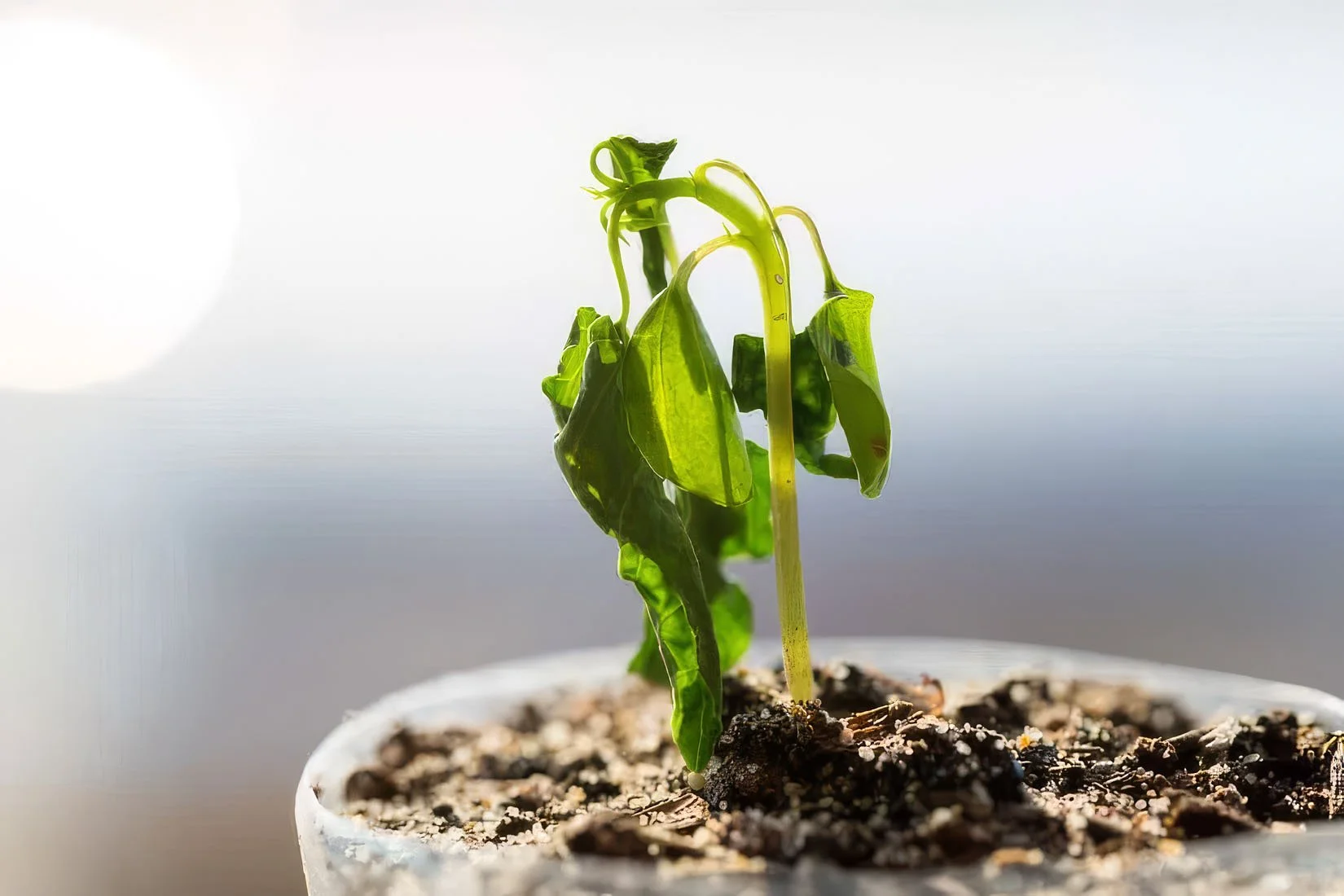
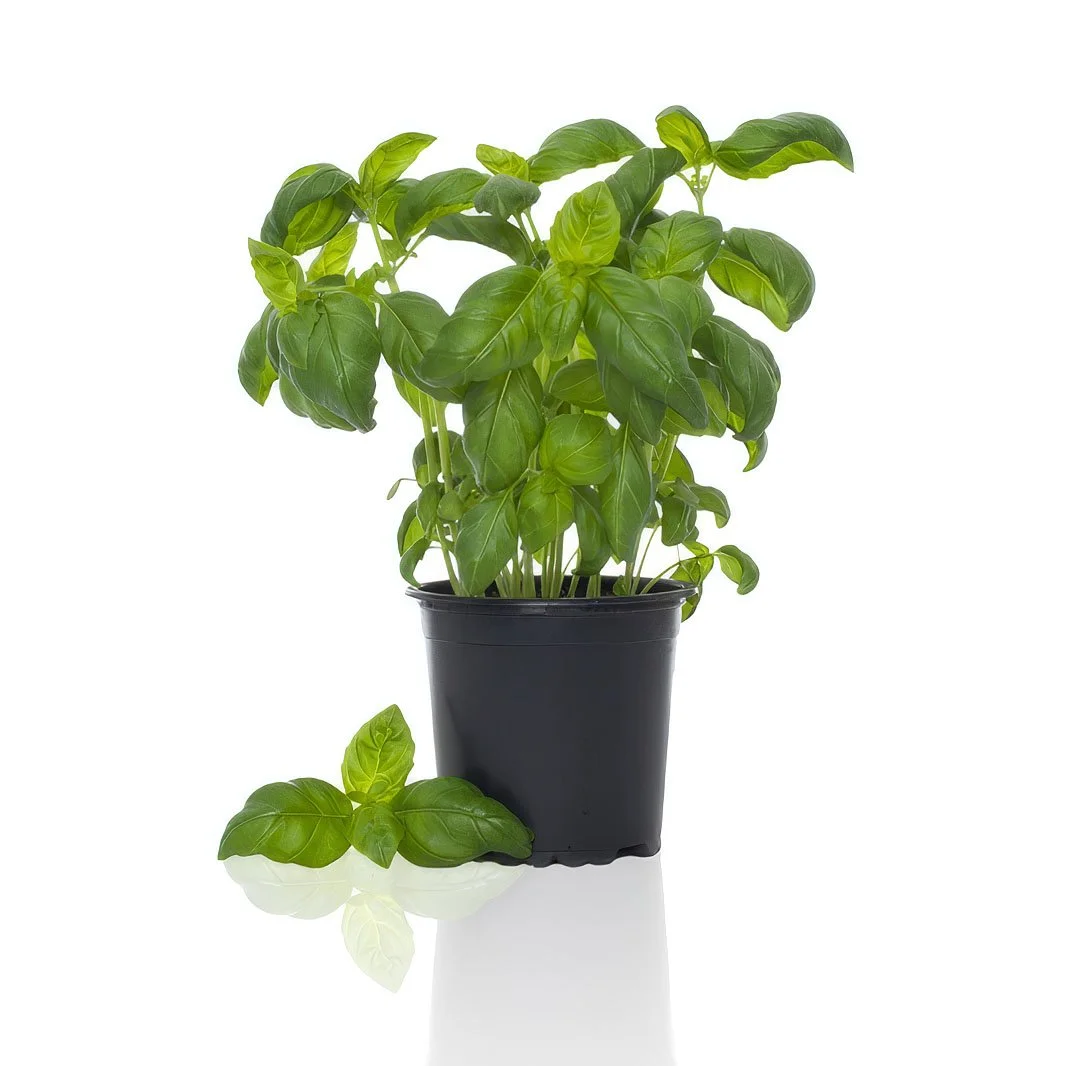
Buying herbs
When using herbs in a store, these can often just be used once before they wilt because of their small mass of soil.
Also, since they are often grown elsewhere a lot of unnecessary transports are needed.
-
![]()
Pests
Regular soil can contain bugs that can slow growth and spread to other plants.
-
![]()
Gardening trend
Growing interest in urban gardening and locally grown food creates an opportunity to make indoor growing more accessible.
Design opportunity:
Make it possible for anyone to grow herbs and vegetables indoors, green thumbs or not.
It should be appealing and fit inside anyones home, and remove as much guesswork as possible when it comes to gardening.
Process
At the start, my idea was to make a fully 3D printed, self-watering planter. When I got it to work, I named it “Crux” and created a webshop for it, selling it to chili growing enthusiasts. 1-2 year later, I met the people whom I started Botanium with.
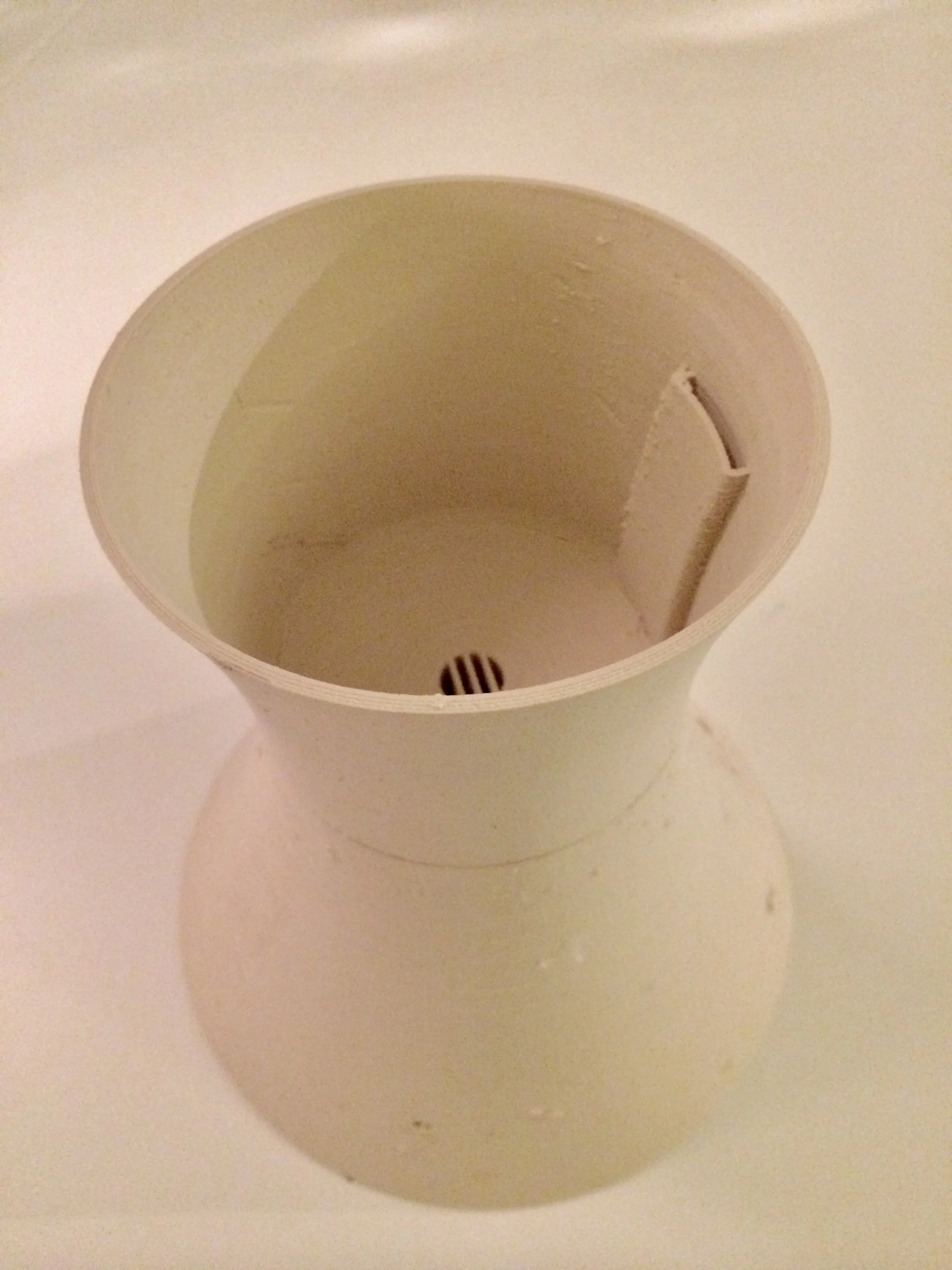
First prototype, evaluating the proportions of the water tank and growing container. (top vs bottom)
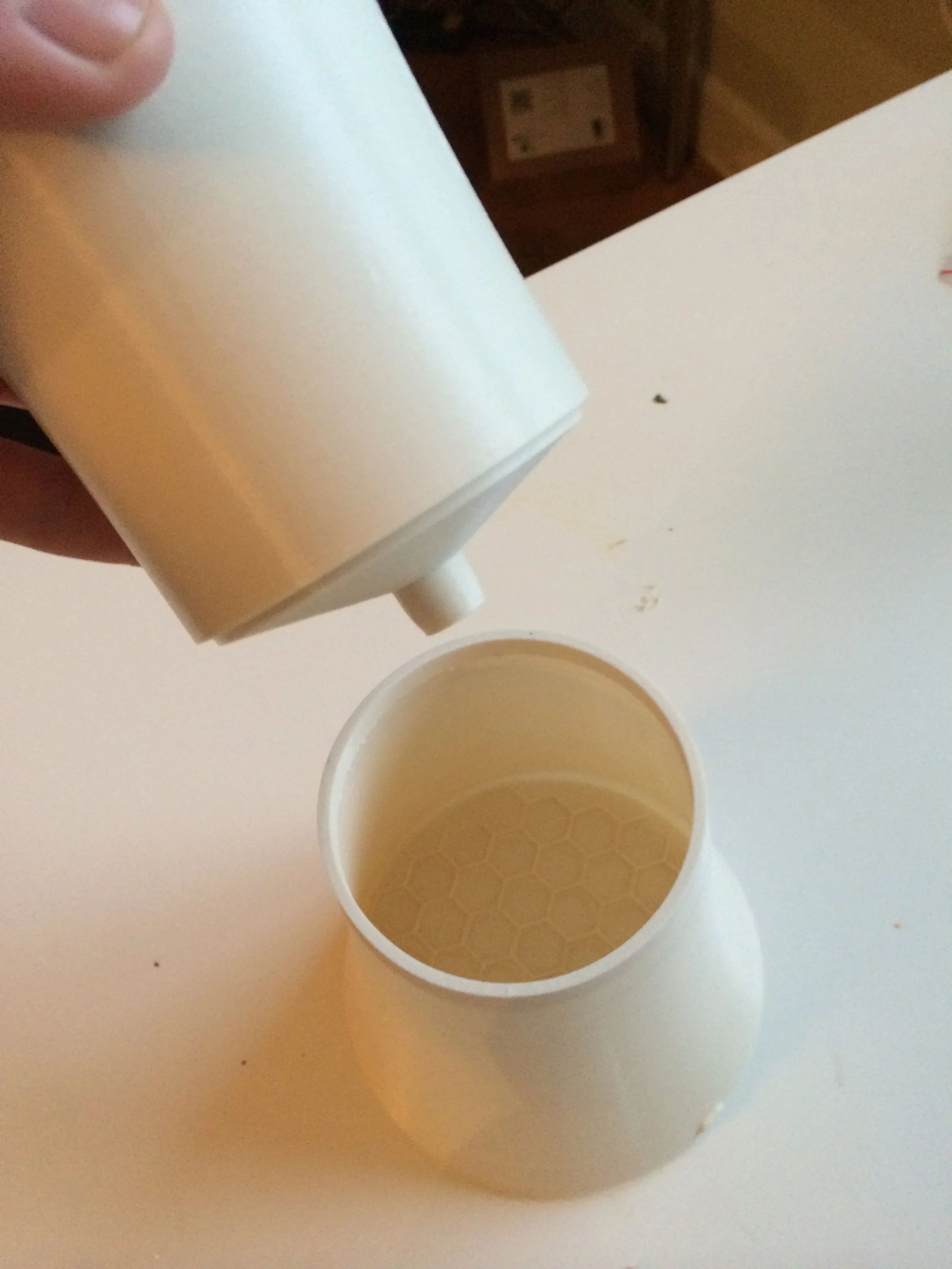
The water tank in which a pump will be placed
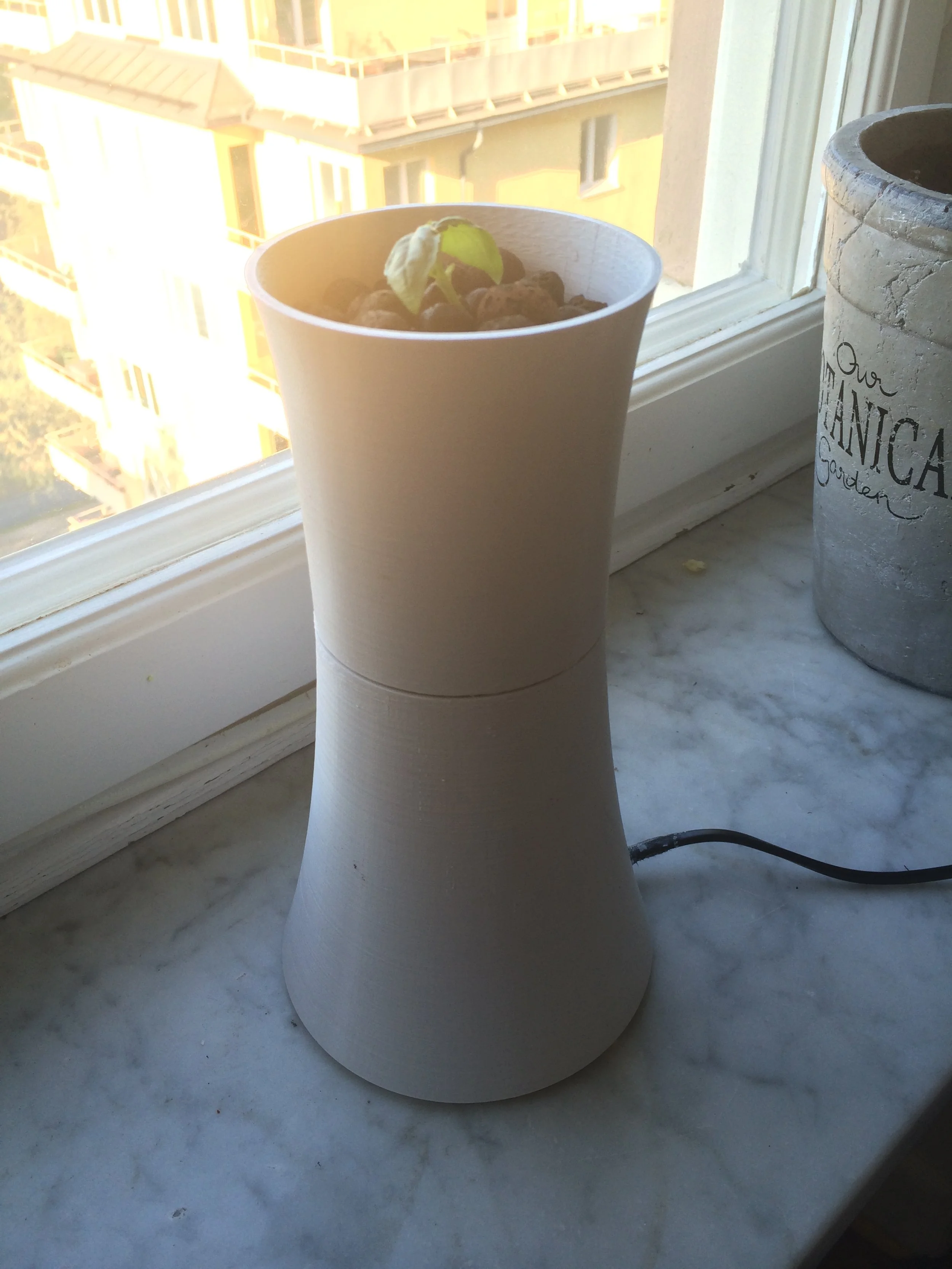
Fully functional 3d-printed prototype. Water is pumped from below into the top container.
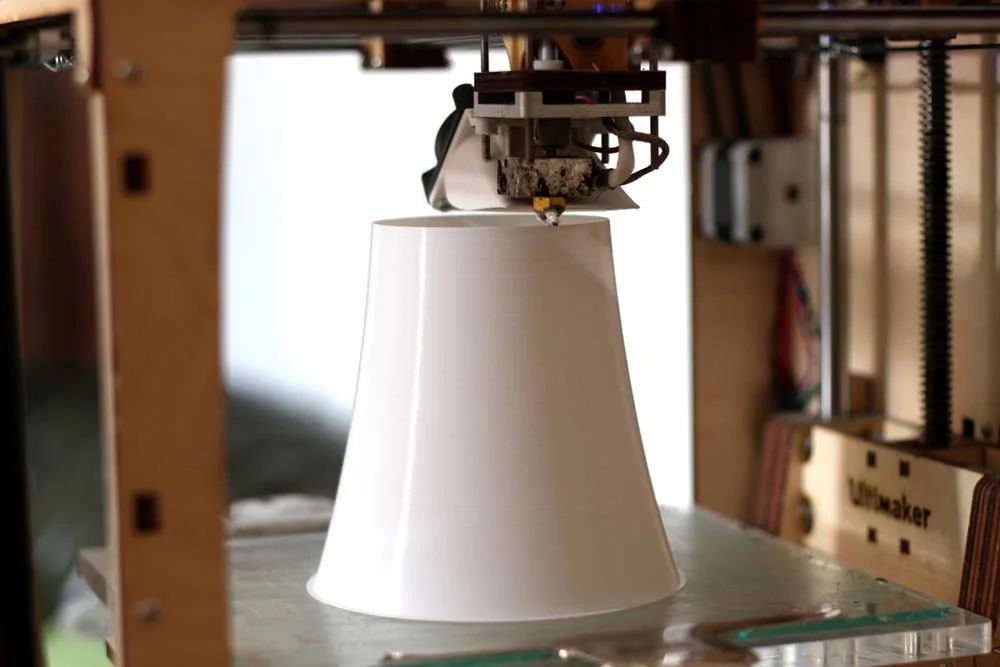
Testing ways to 3d print with better surface finish
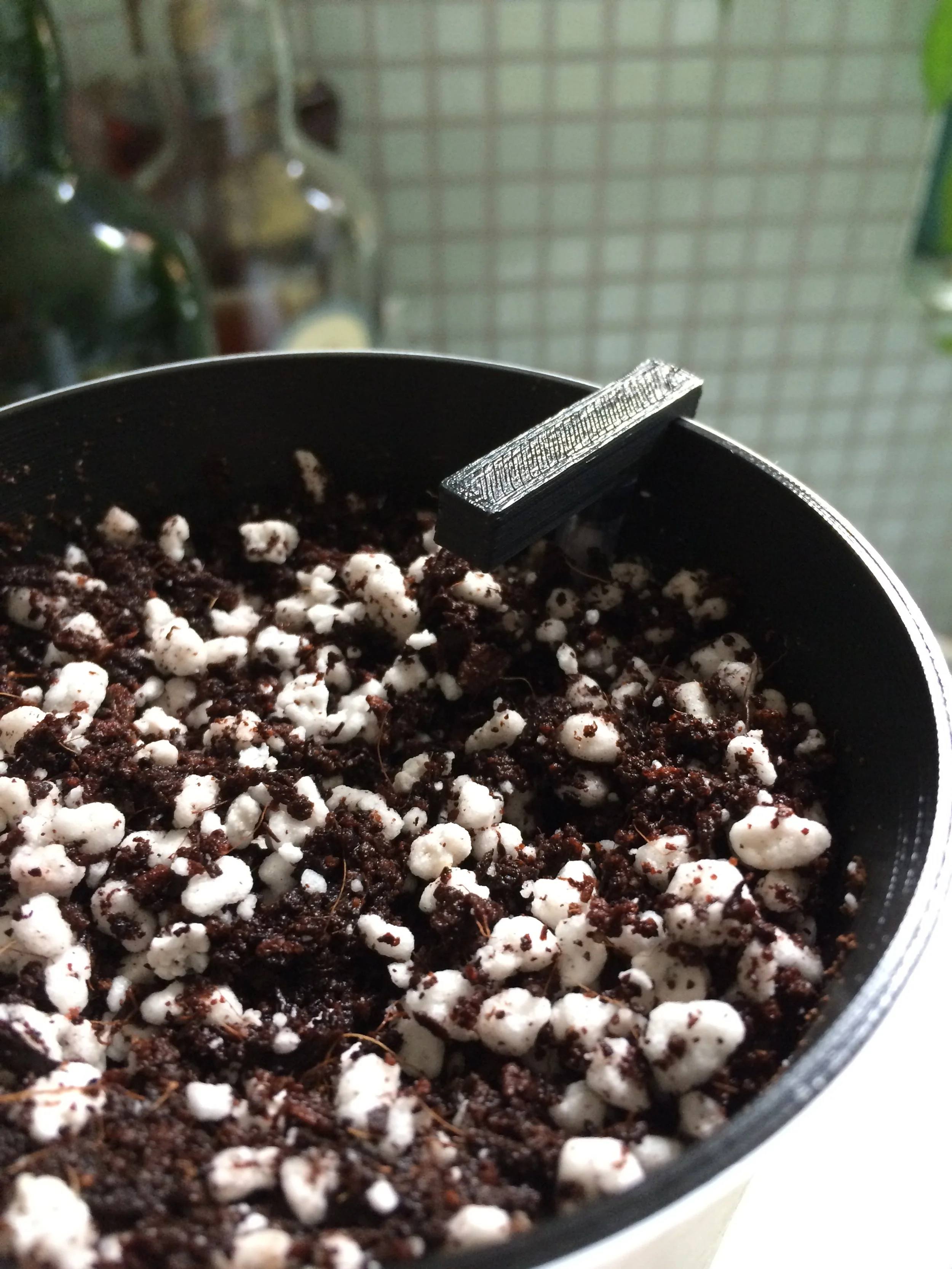
Experimenting with watering from top down instead of from below, in order to make the water last longer.
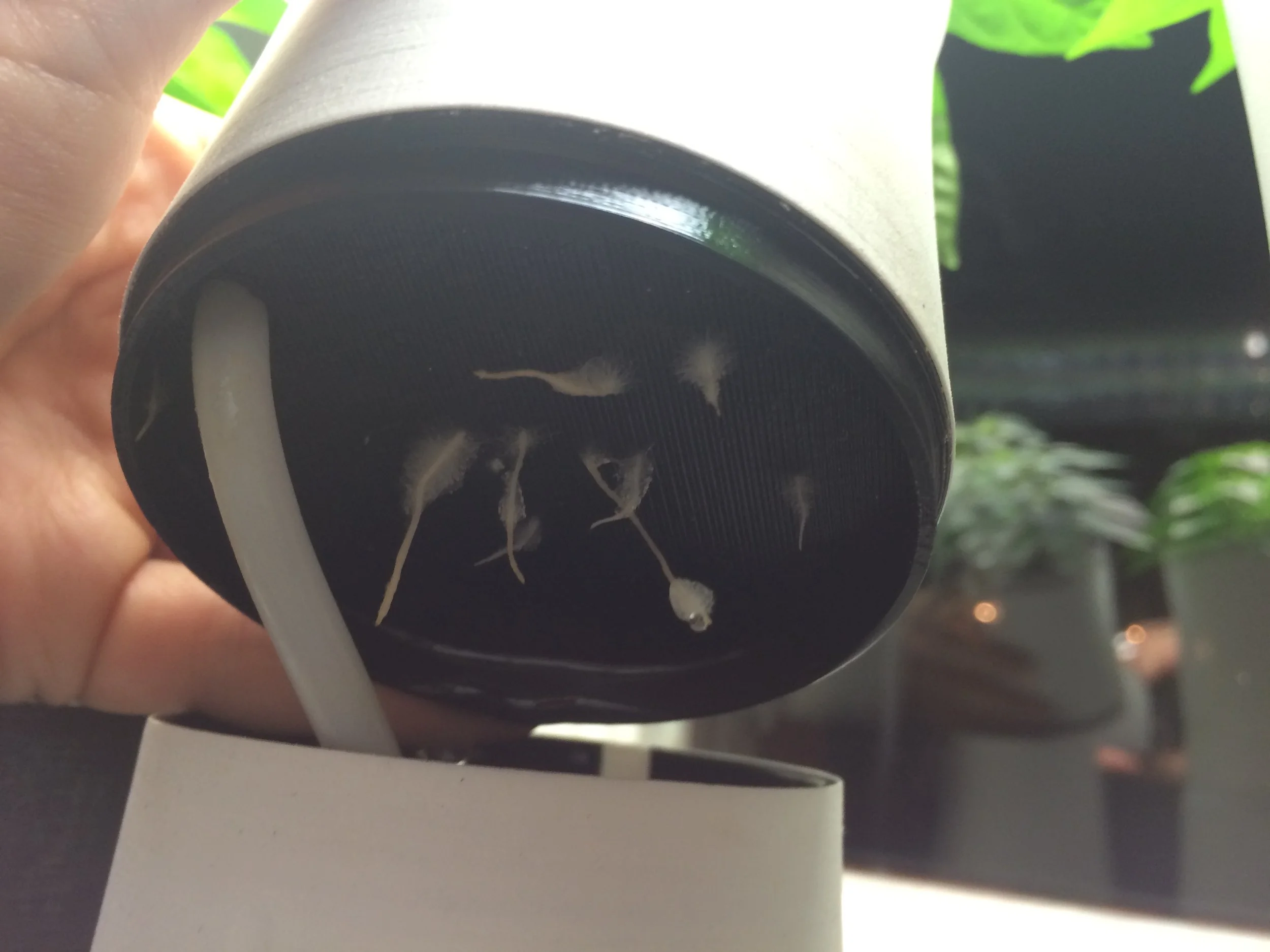
Early prototypes had a mesh that couldn't prevent the roots from growing down into the water tank.
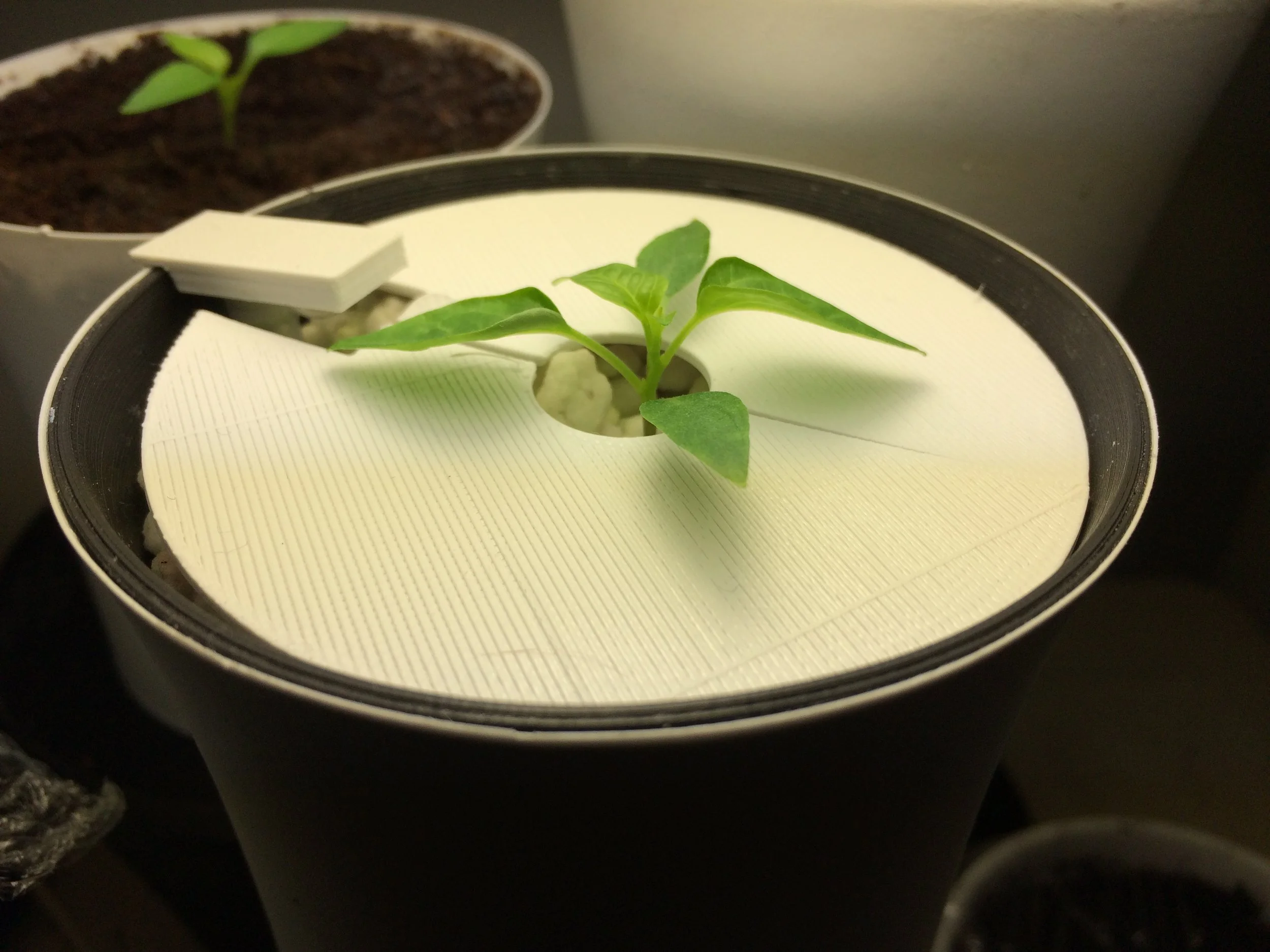
Cap that prevents water from evaporation.
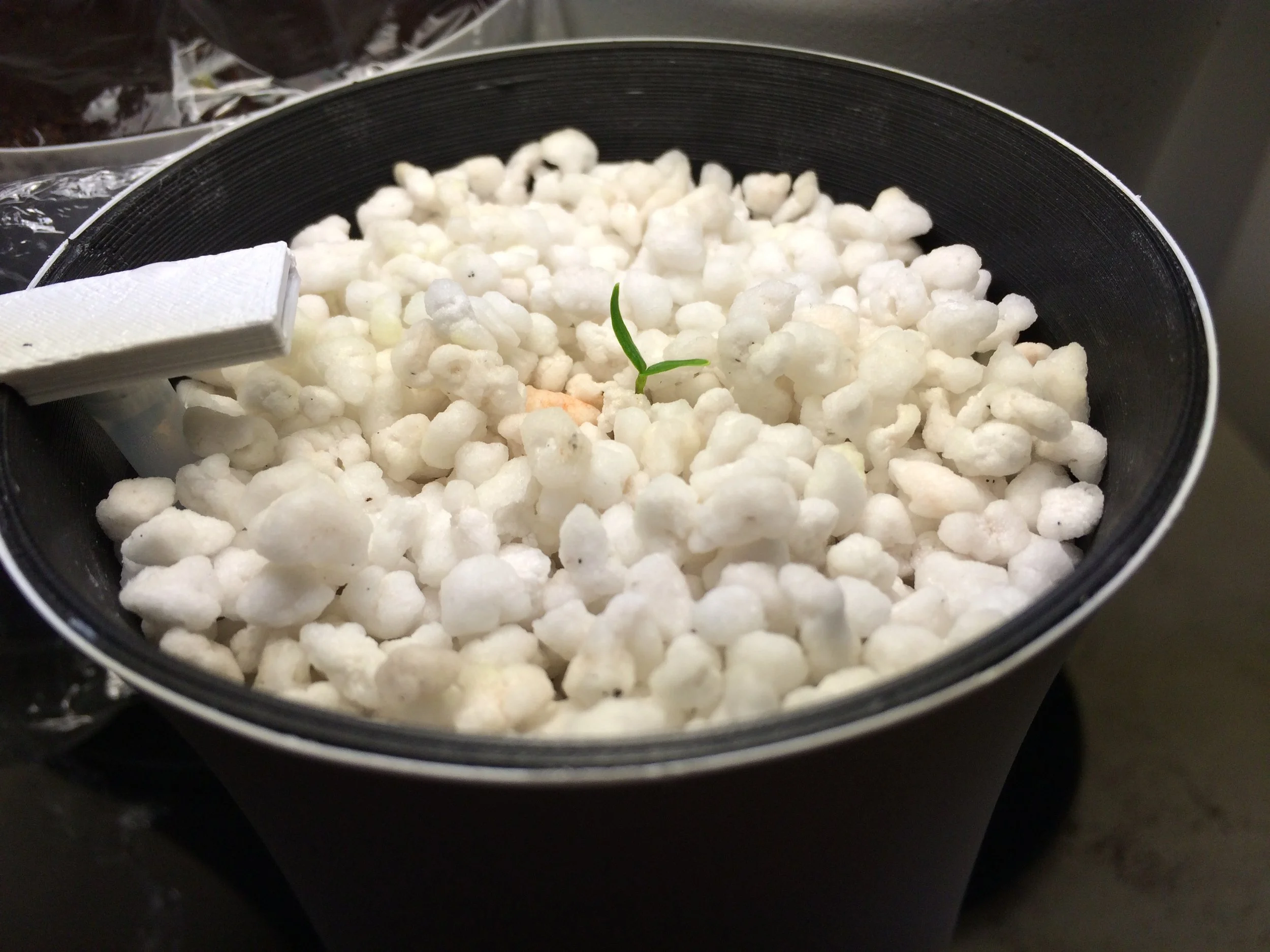
Trying out a different growing medium.
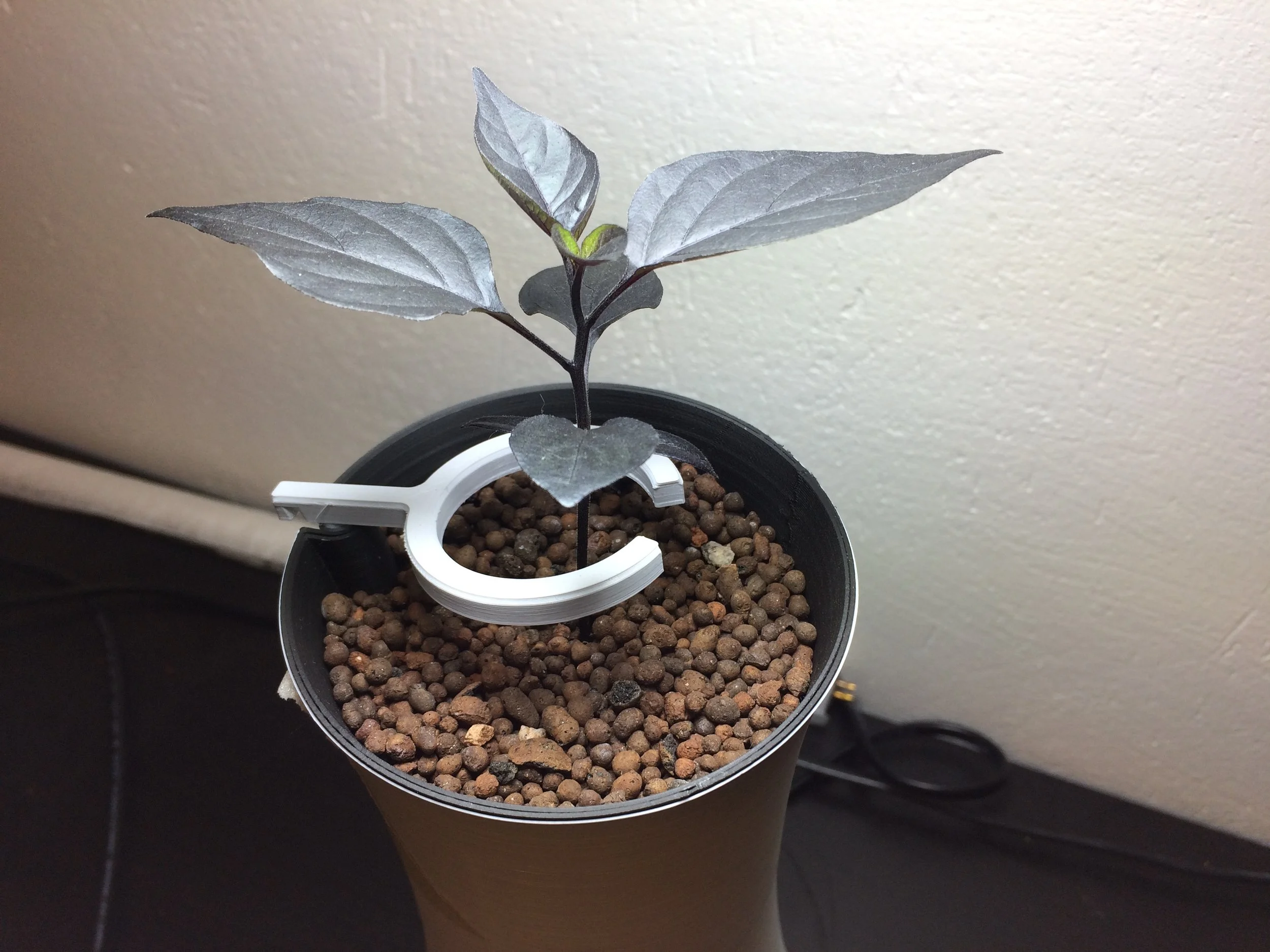
Another water dispenser design that spreads out the water better.
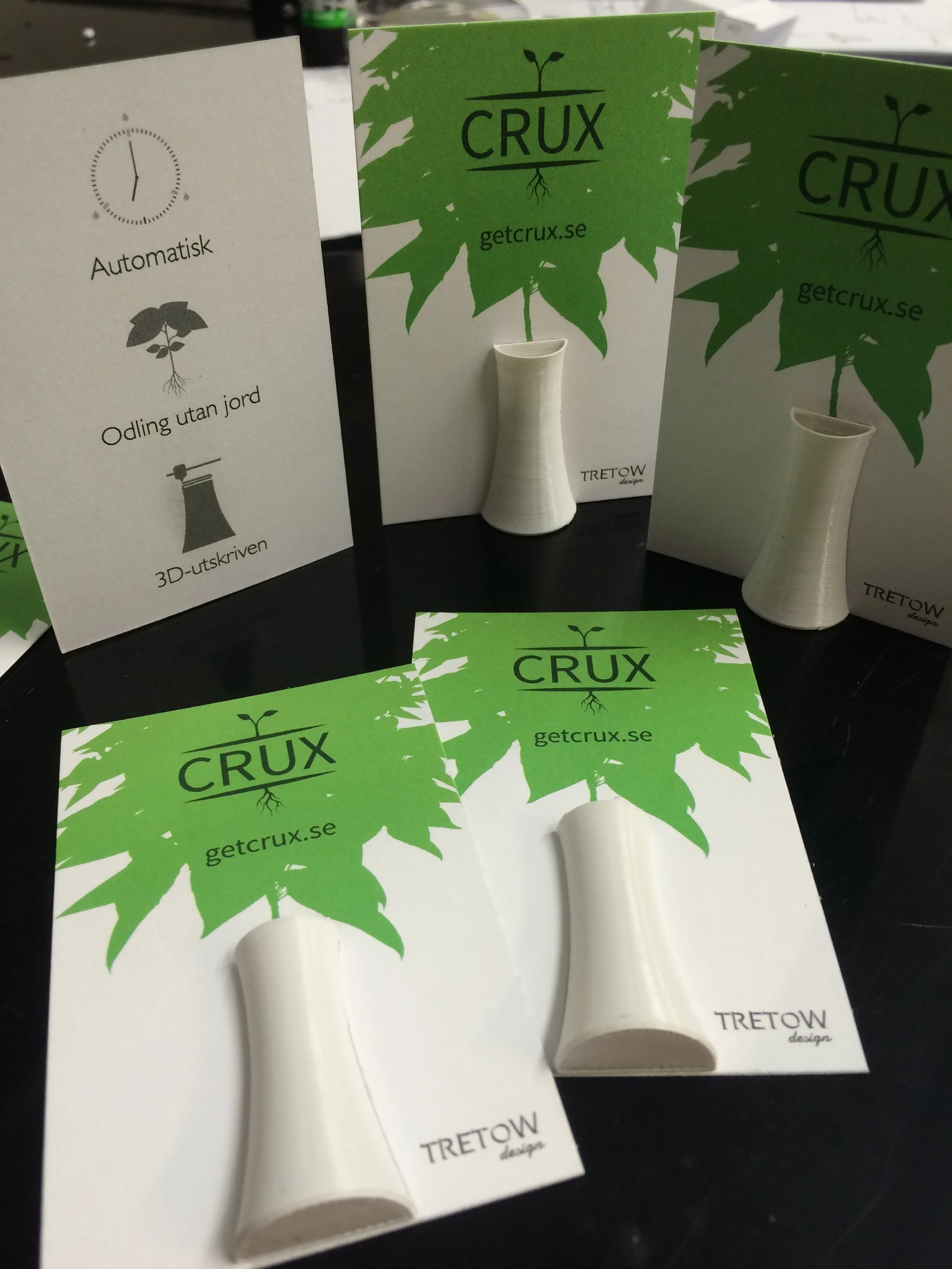
Started selling it online as "Crux" to chili growing enthusiasts.
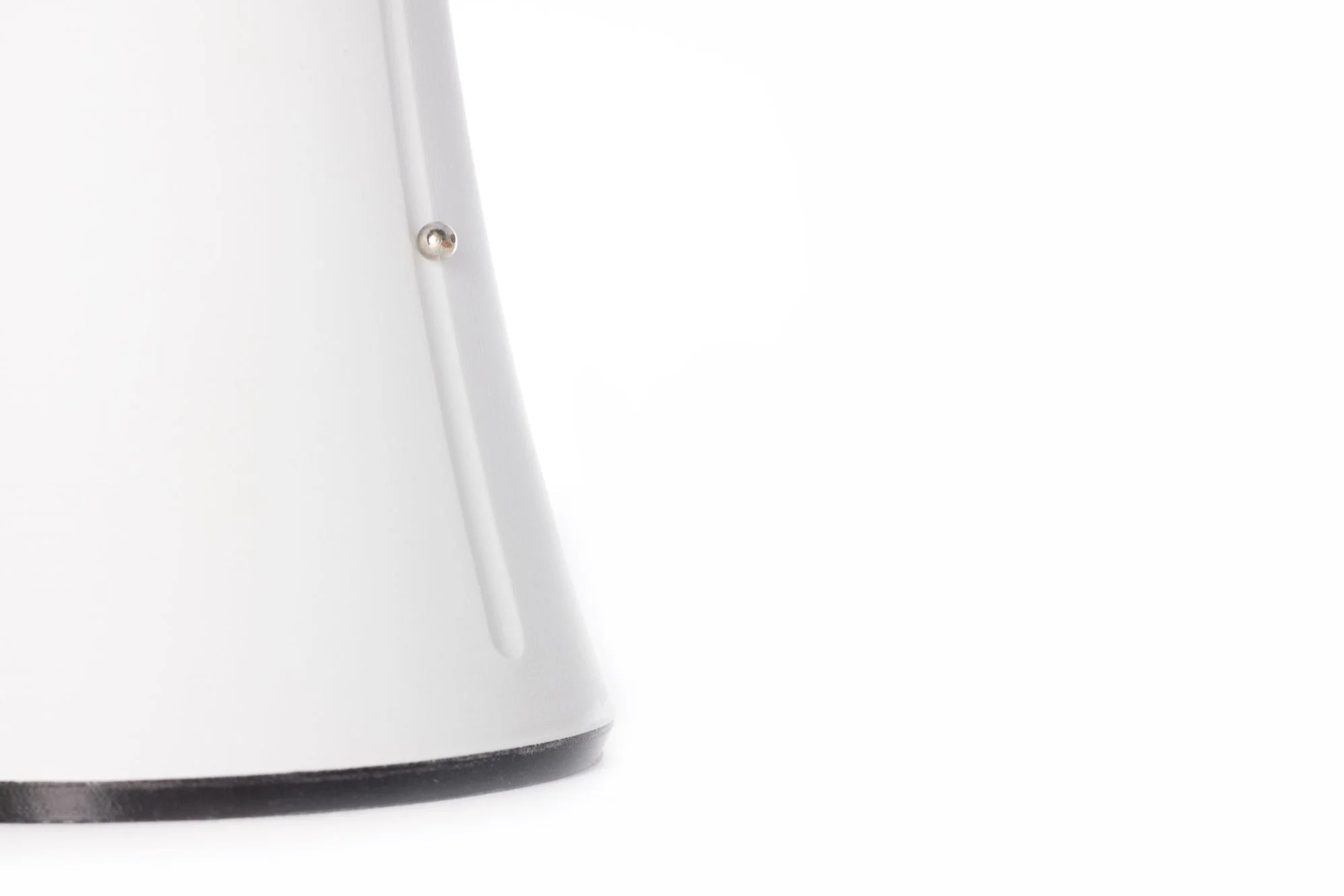
This version had a magnet ball tracking the water level inside the tank. Problematic, since the magnet was easy to loose and wasn't child safe.
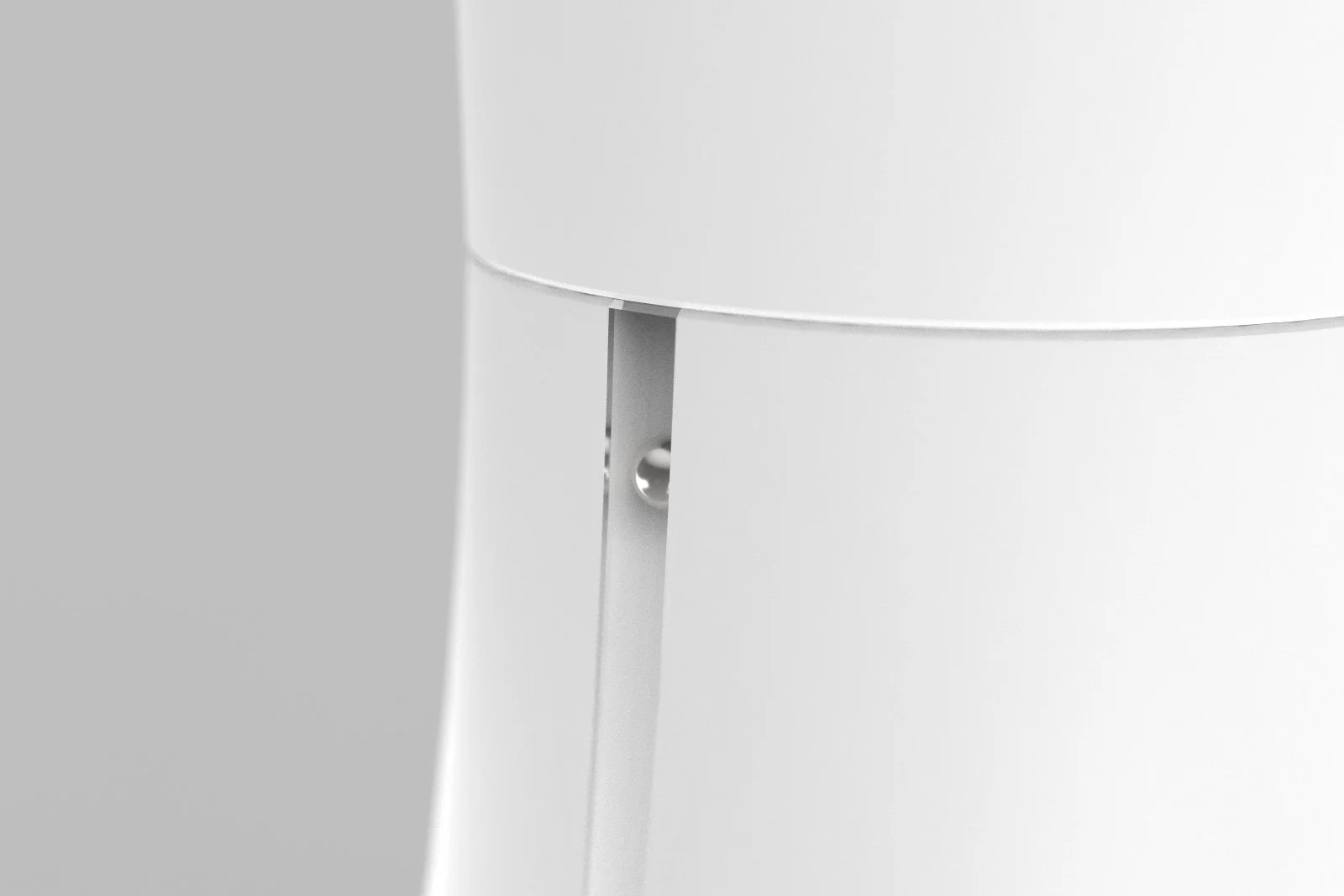
Idea for how to prevent the magnet from being lost. At this stage we were starting up Botanium, and figuring out mass production.
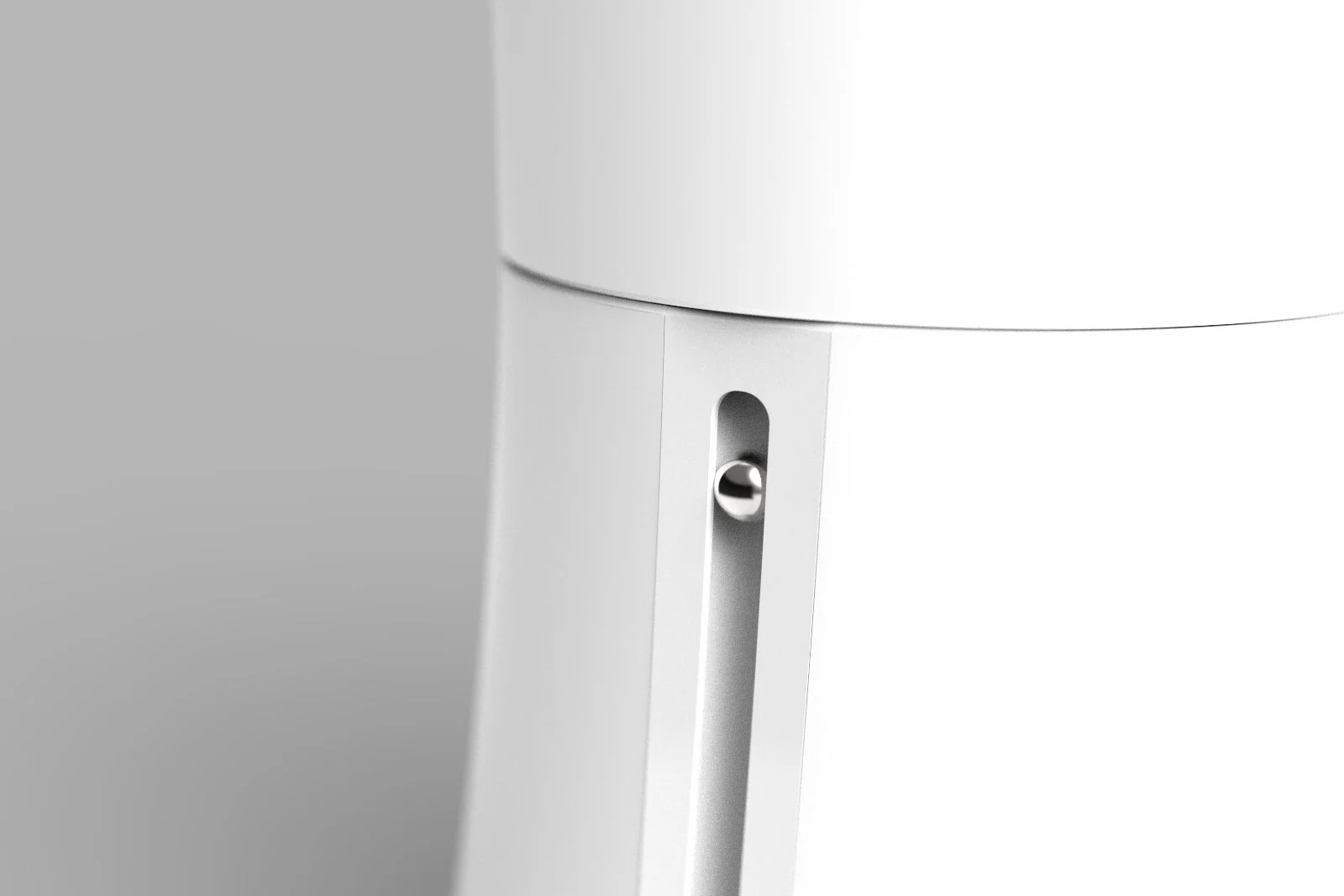
Another solution for the magnet. But eventually, we decided to abandon the magnet because of the increased complexity of manufacturing, and went for a window in SAN (two-shot injection moulding)
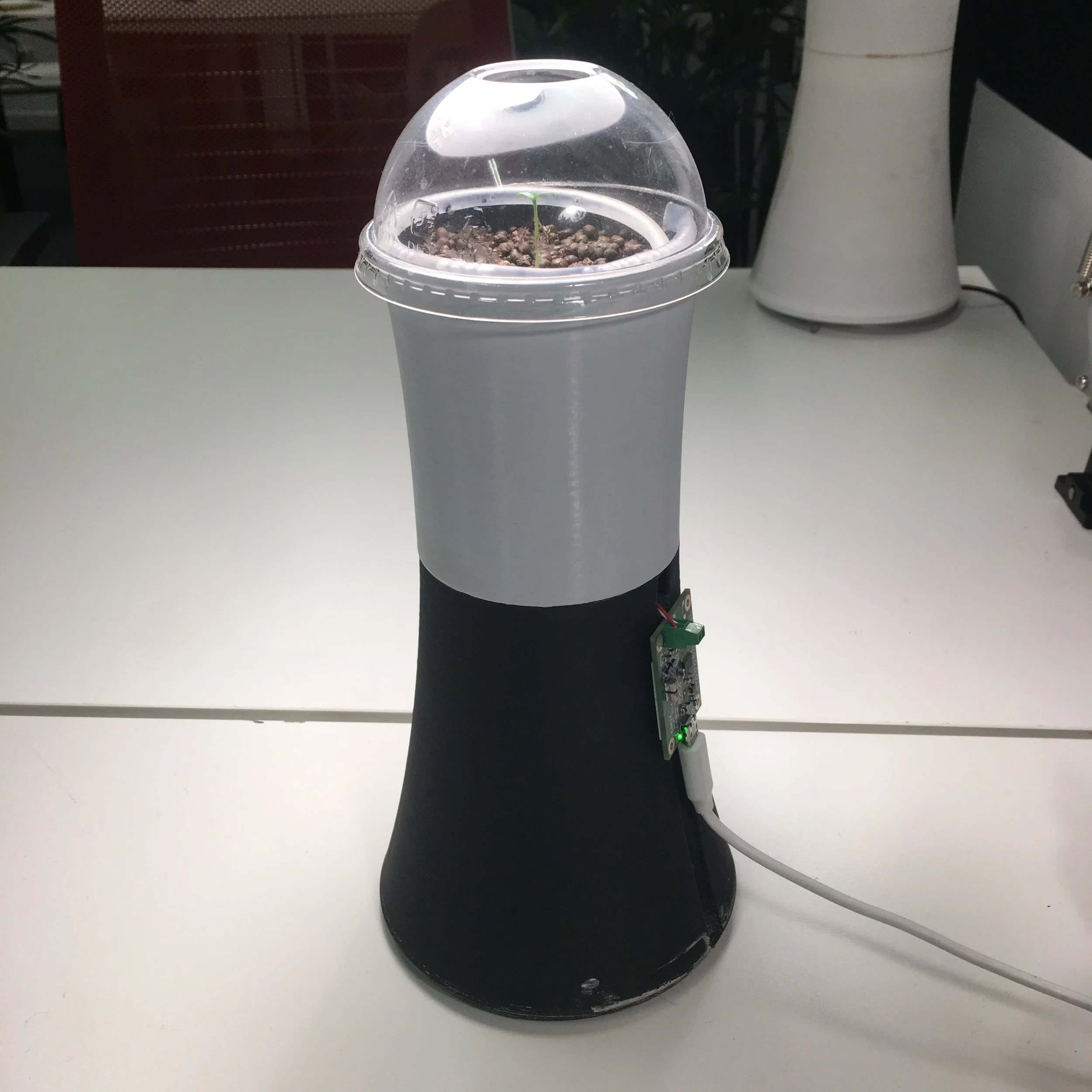
Testing the PCB.
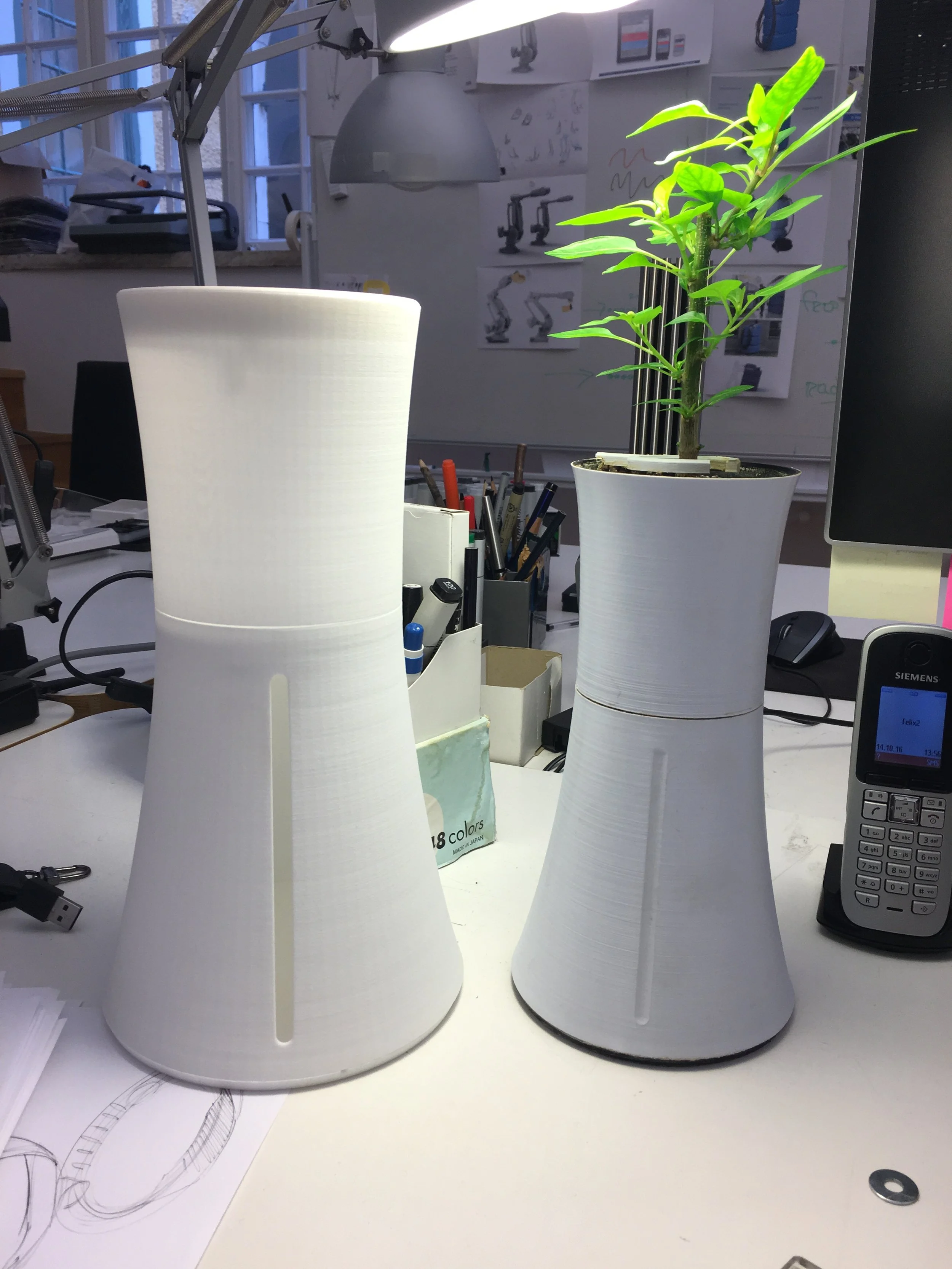
New prototype (left) - re-modeled for injection moulding instead of 3d-printing. The final product was somewhere in between them in size.
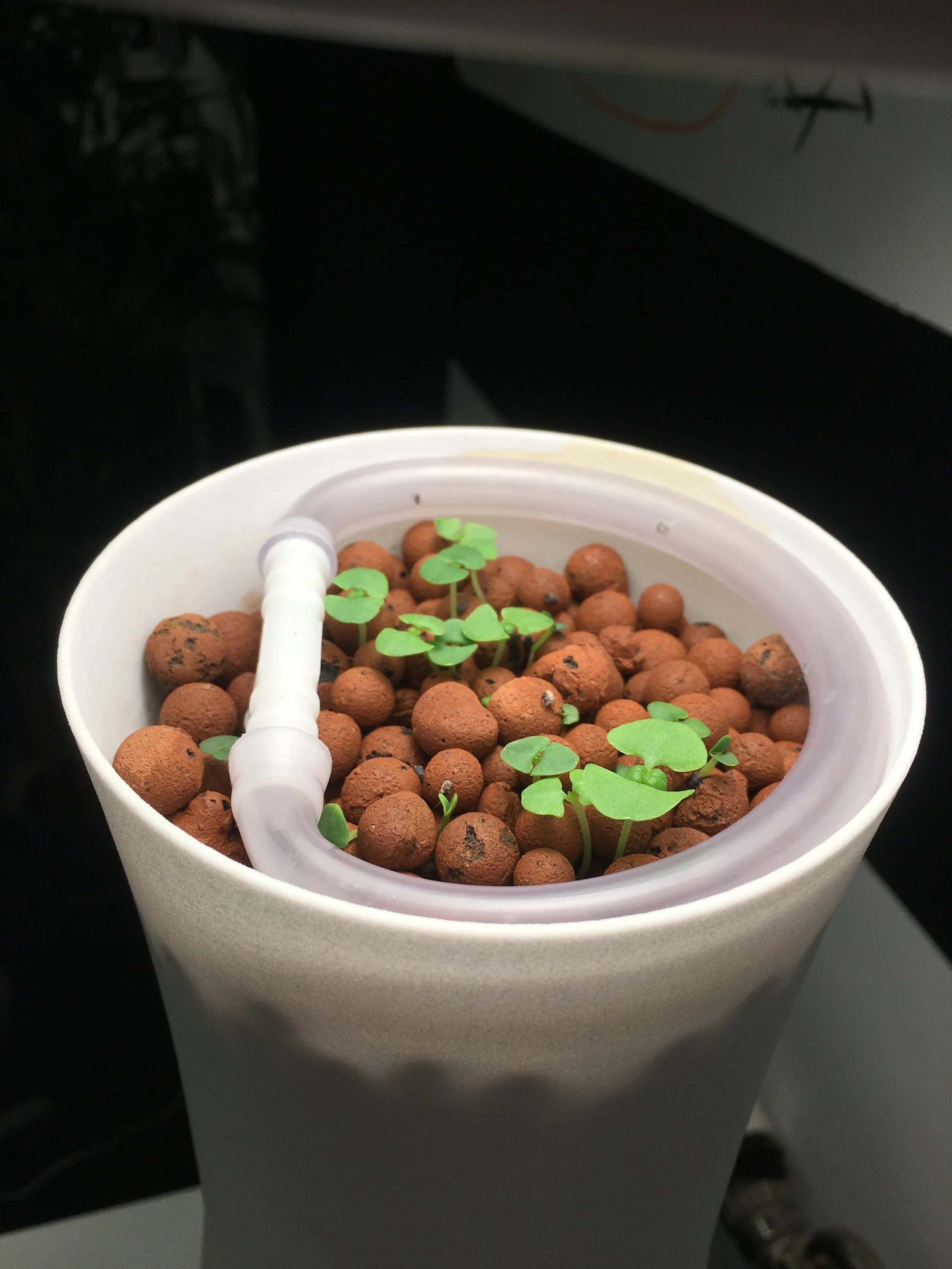
Testing the first prototype with a simple water distribution ring.
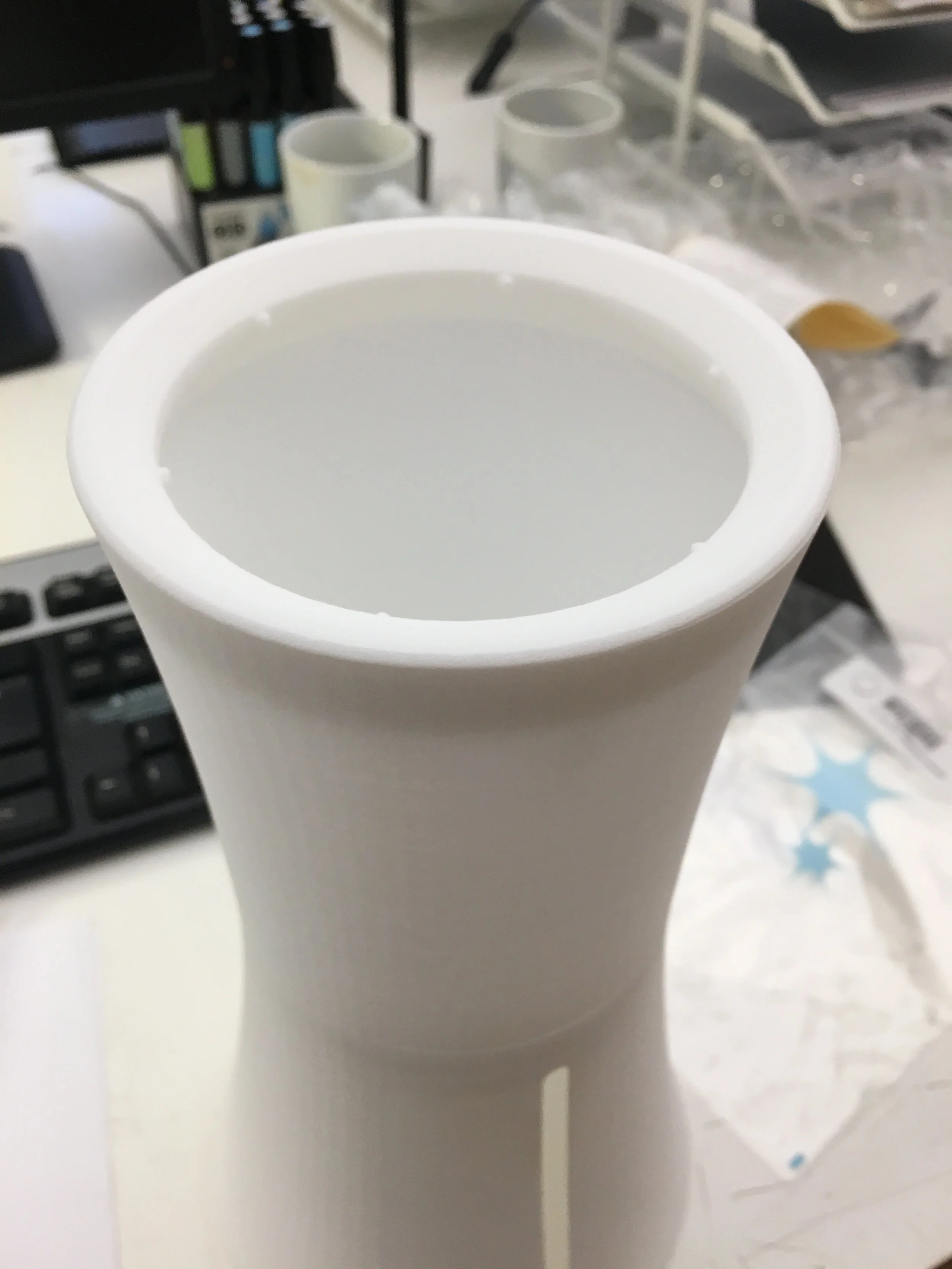
New "watering ring" that evenly distributes water.
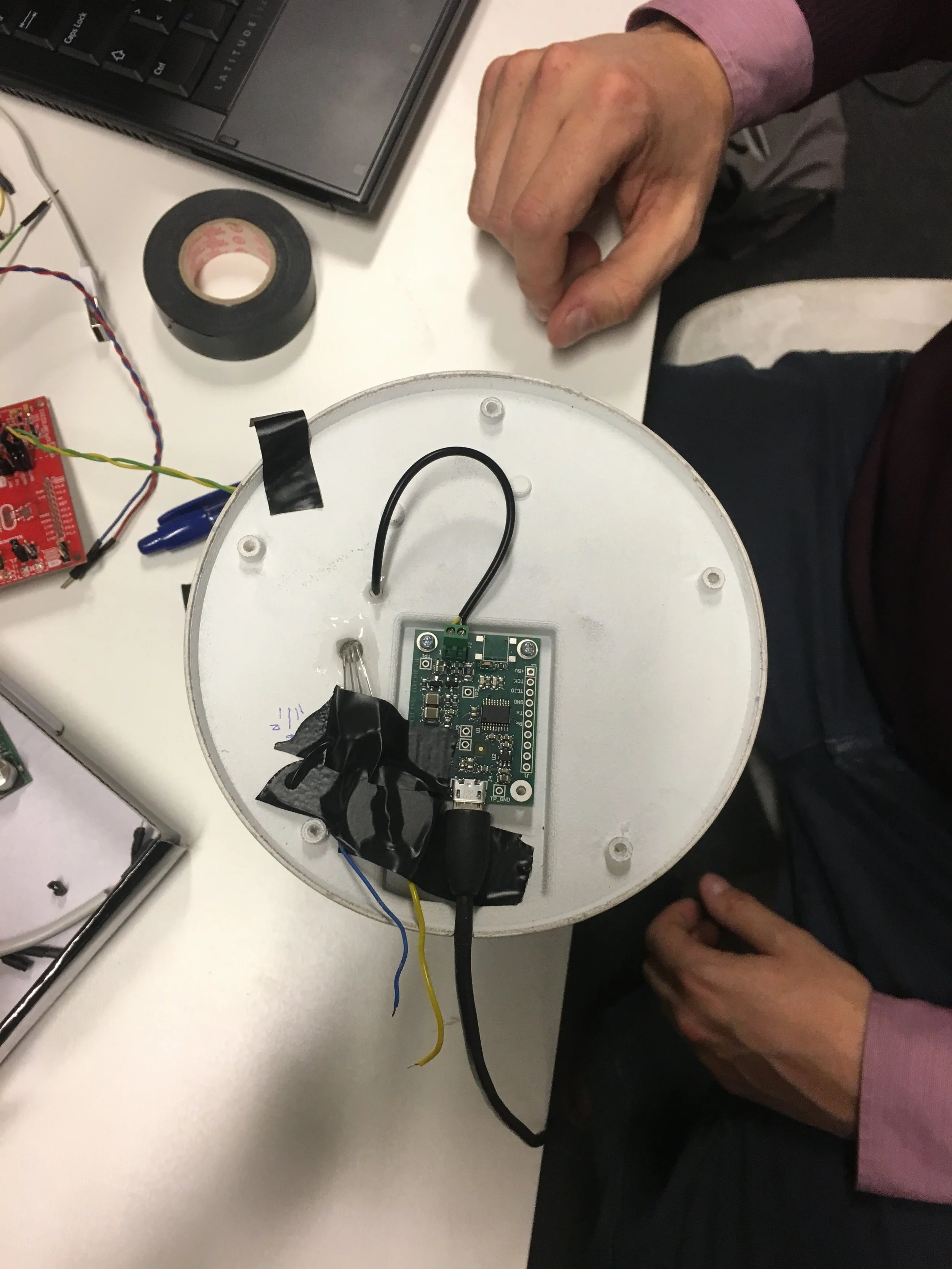
Electronics that control the pump and is powered by USB.
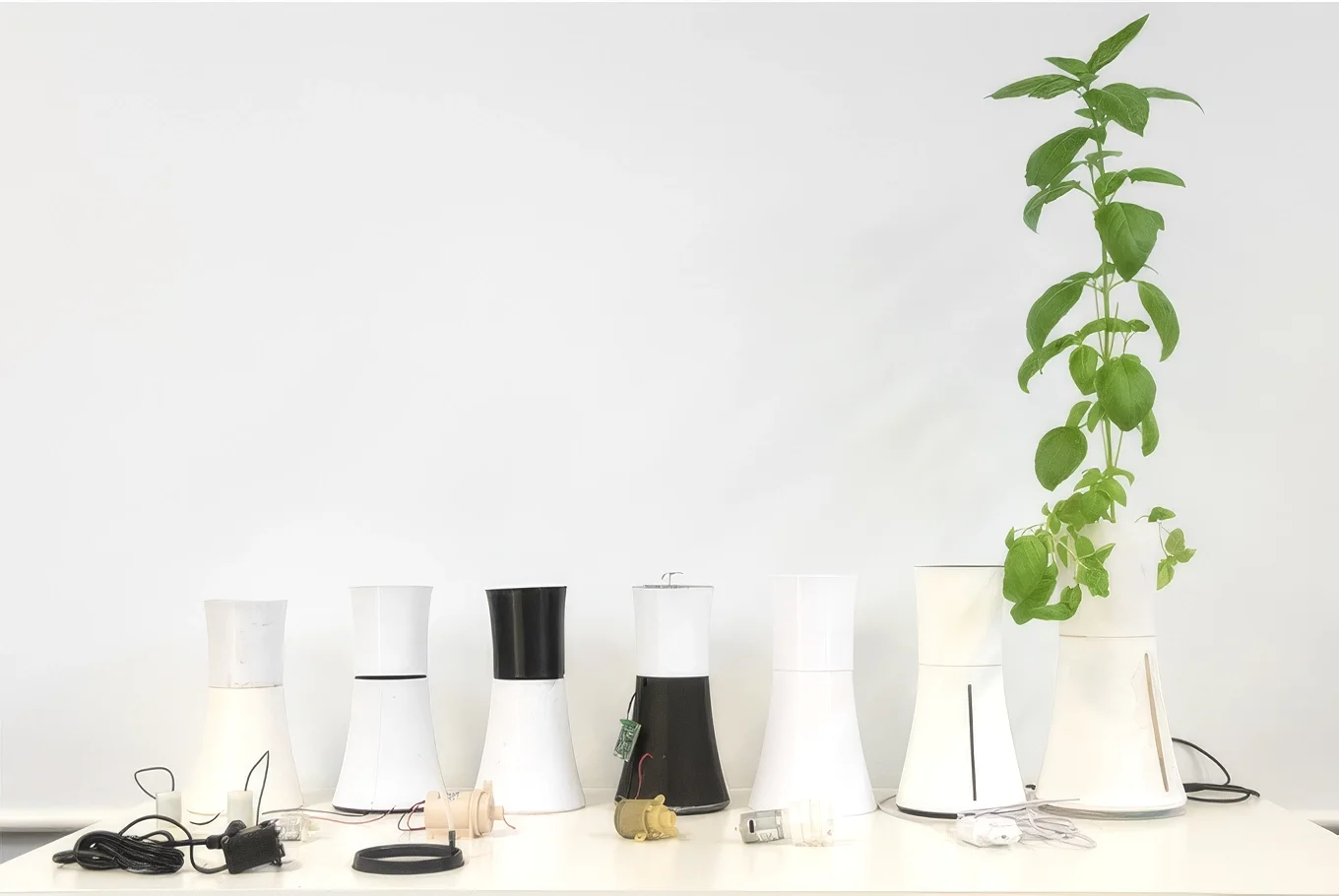
Various prototypes.
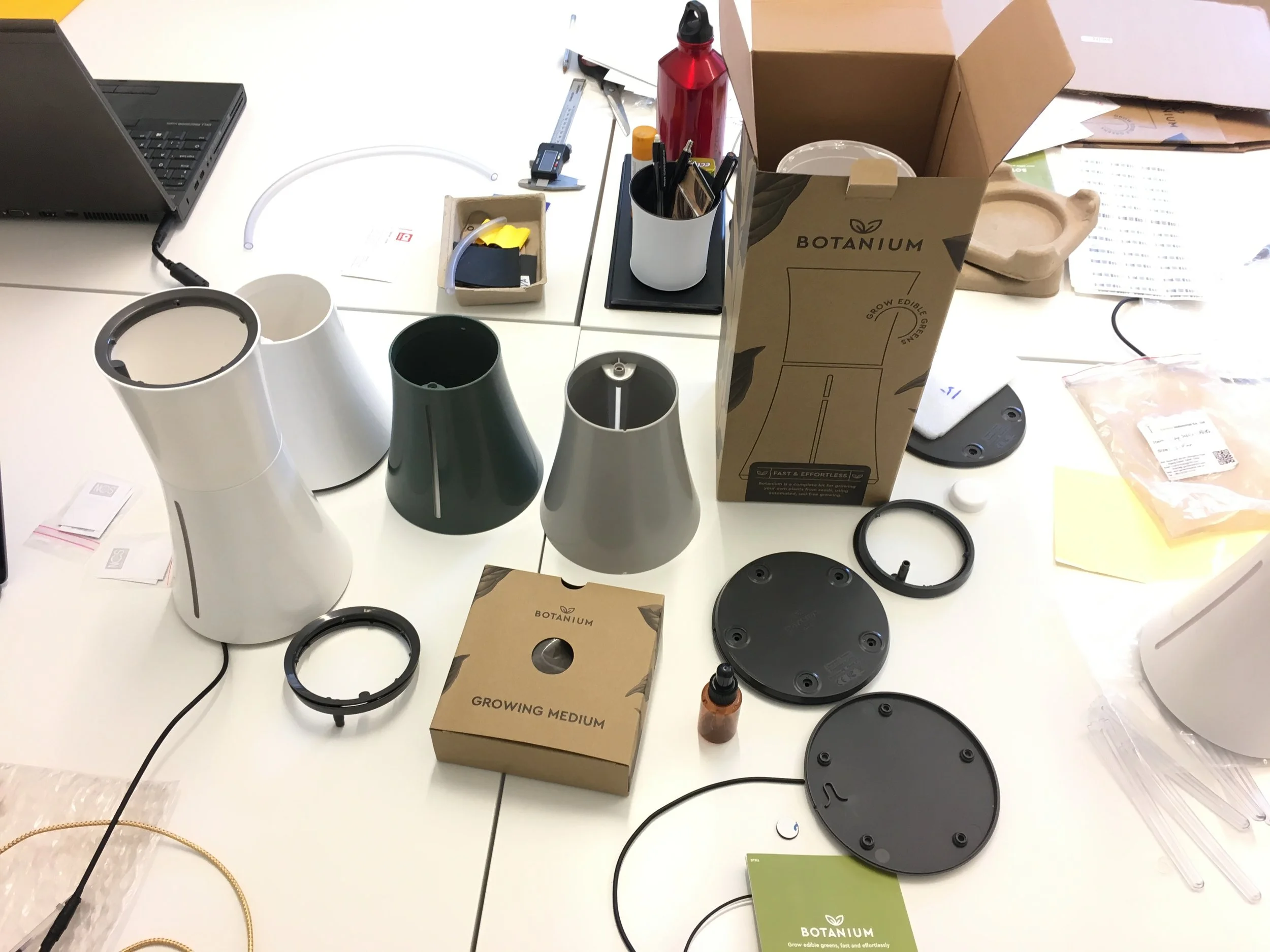
First samples from the factory with injection moulded parts.
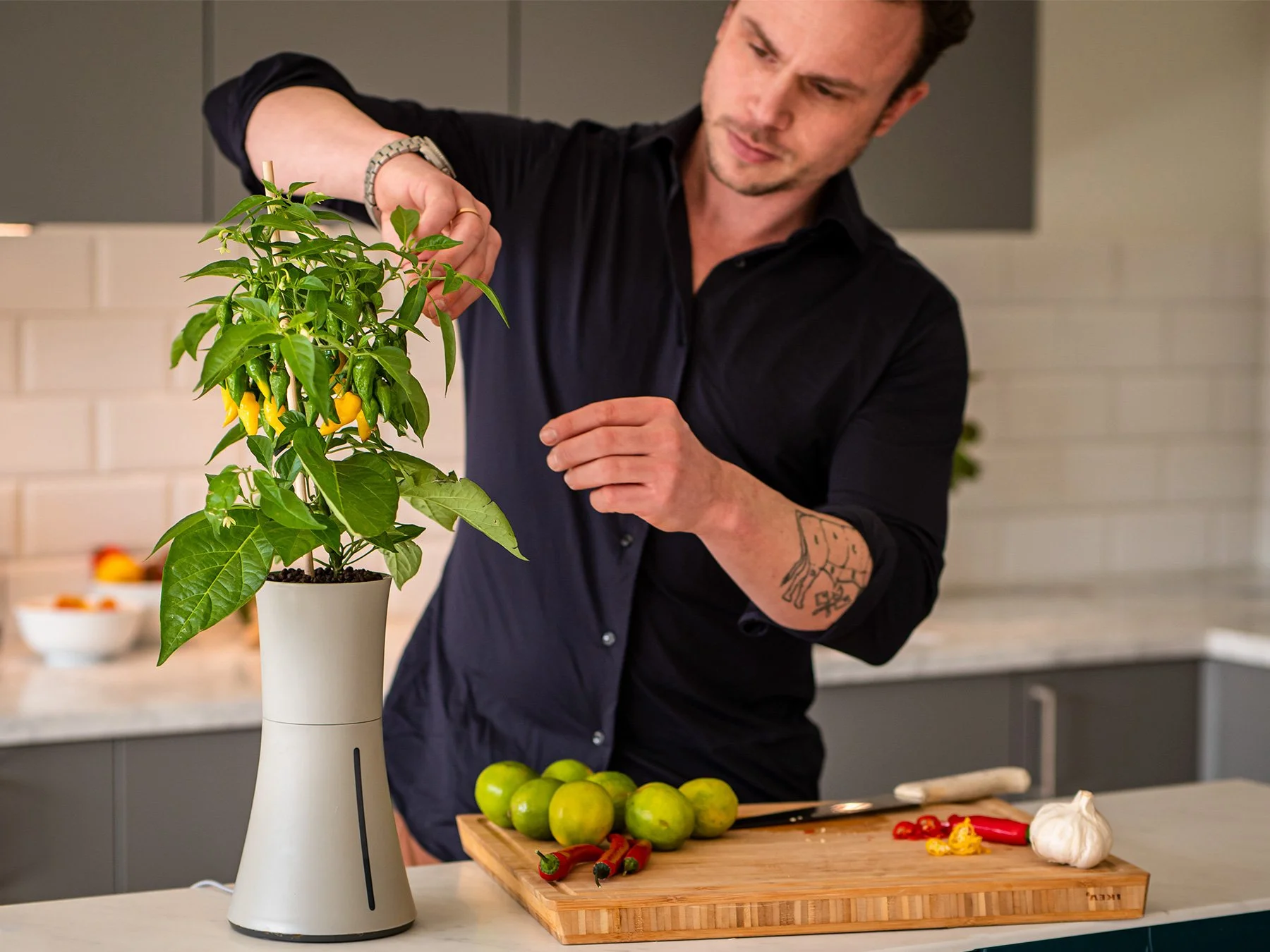
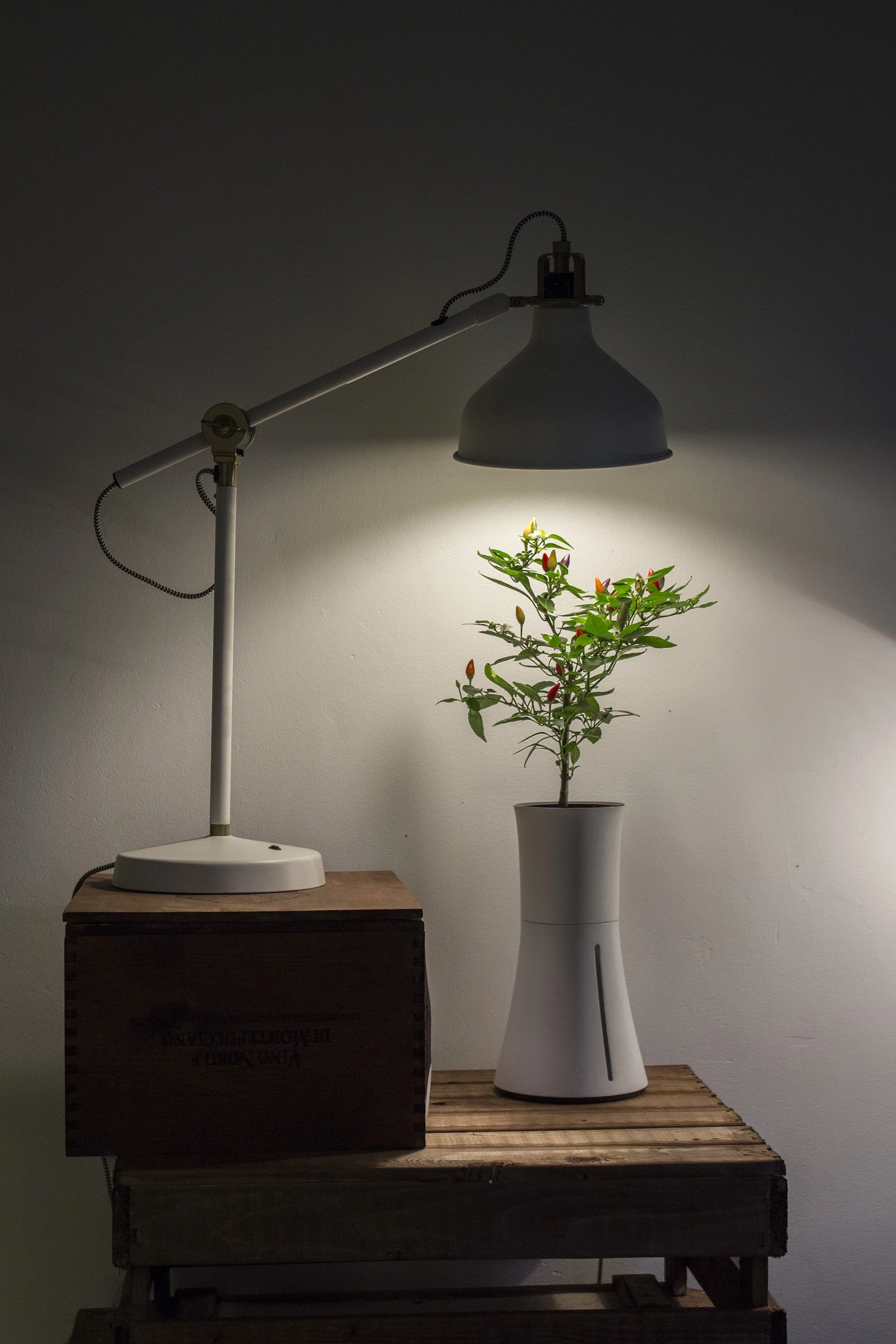
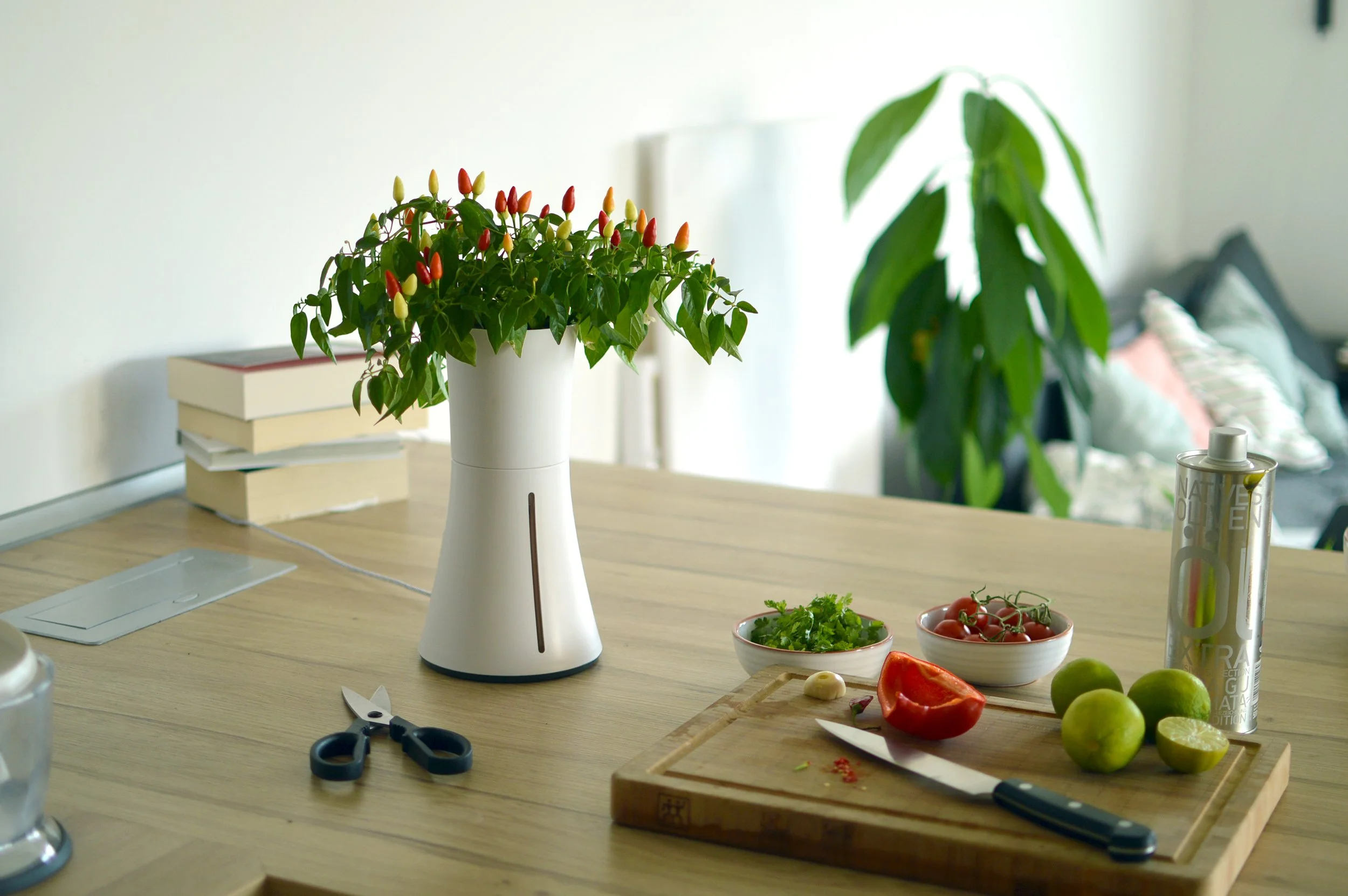
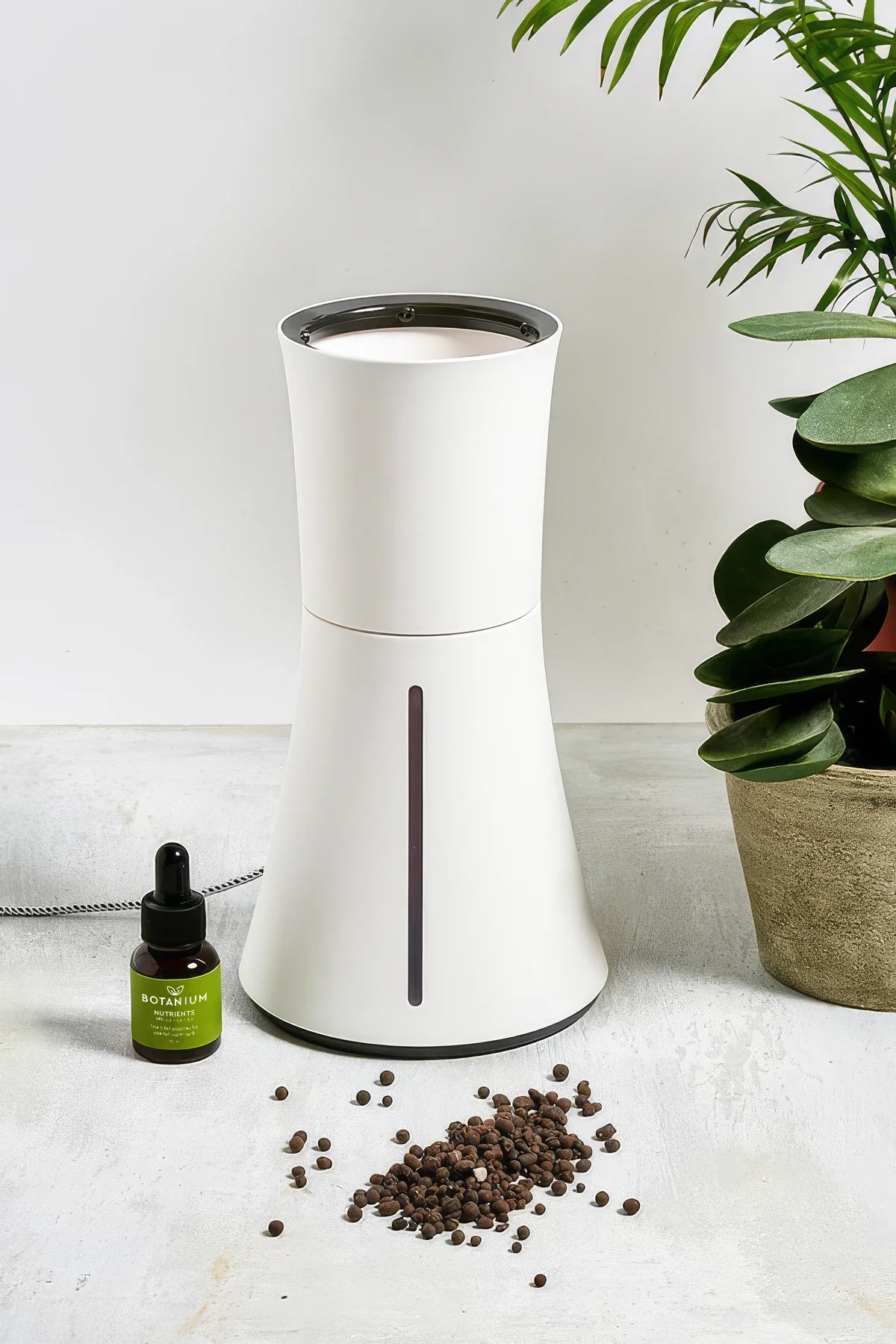
Final product
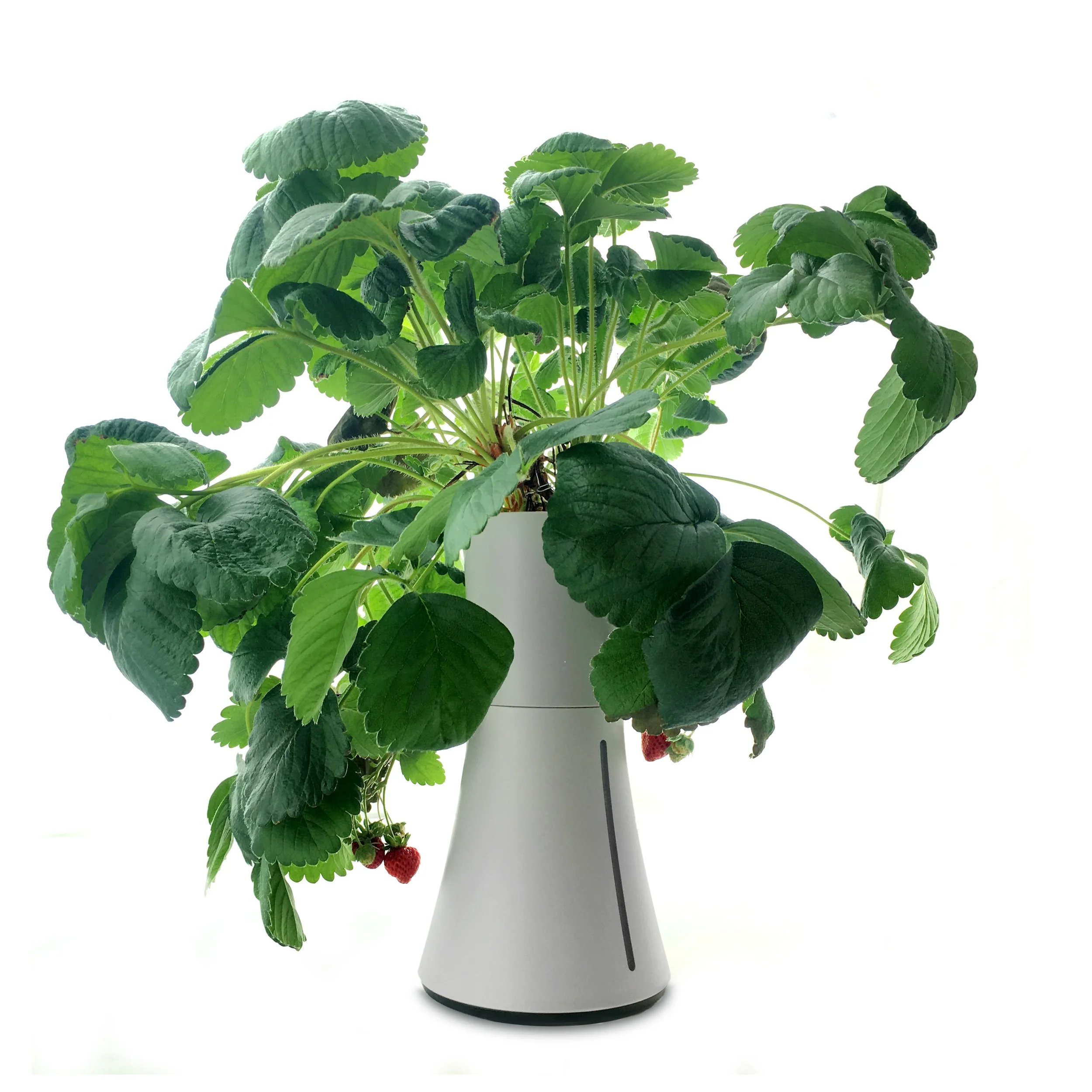
-

Less maintenance
A large water tank that lasts several weeks, depending on the plants and temperature, allowing the user to leave it alone for longer periods.
-
Automatic watering
The Botanium is equipped with a submersible water pump and a timer circuit that waters the plant every third hour.
-
Faster growth
The abundance of water, oxygen and nutrients allows the plants to grow quicker and produce more harvests.
-
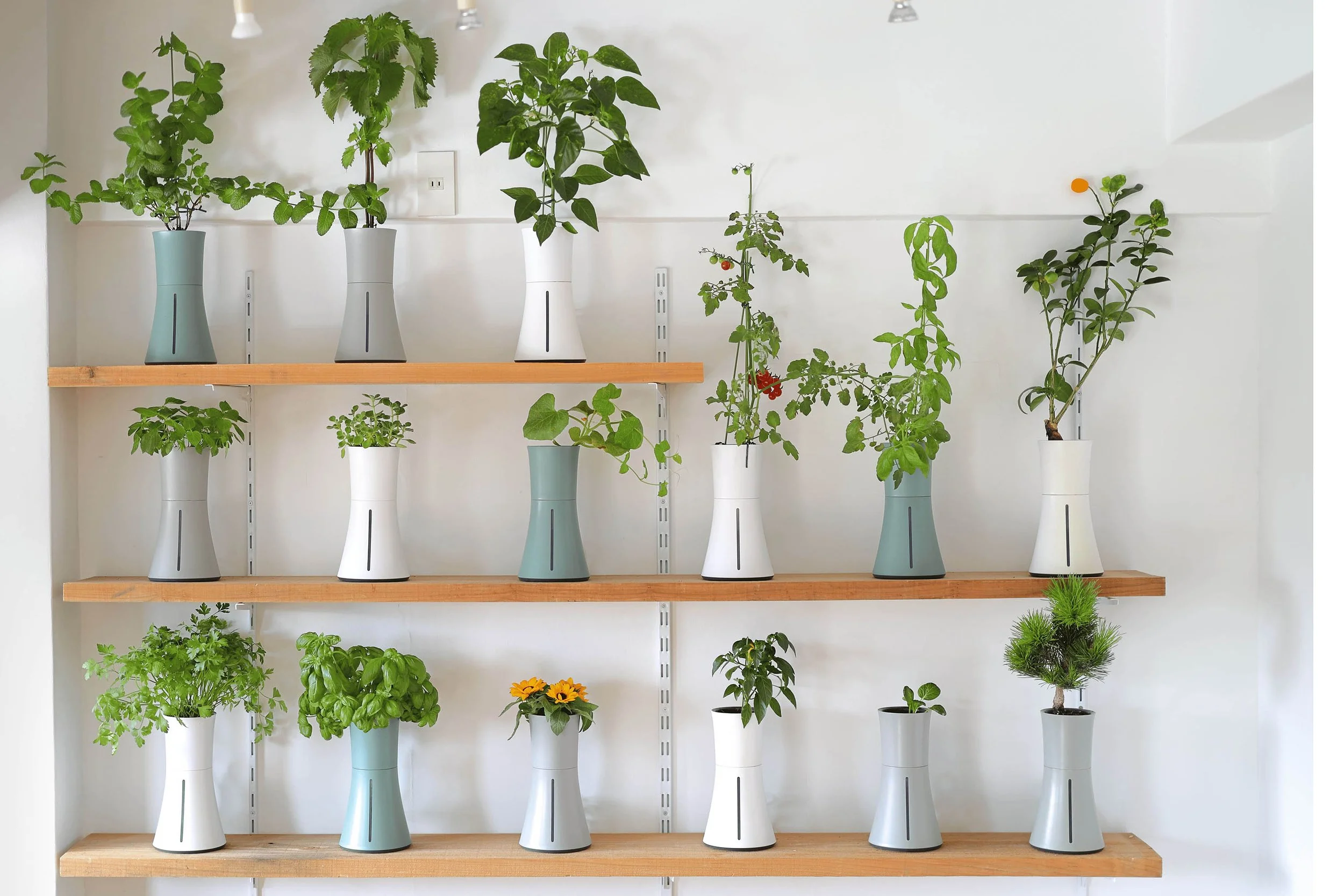
Plant agnostic
There no need to adjust the soil or watering depending on what is grown, which removes a lot of guesswork.
Hydroponics
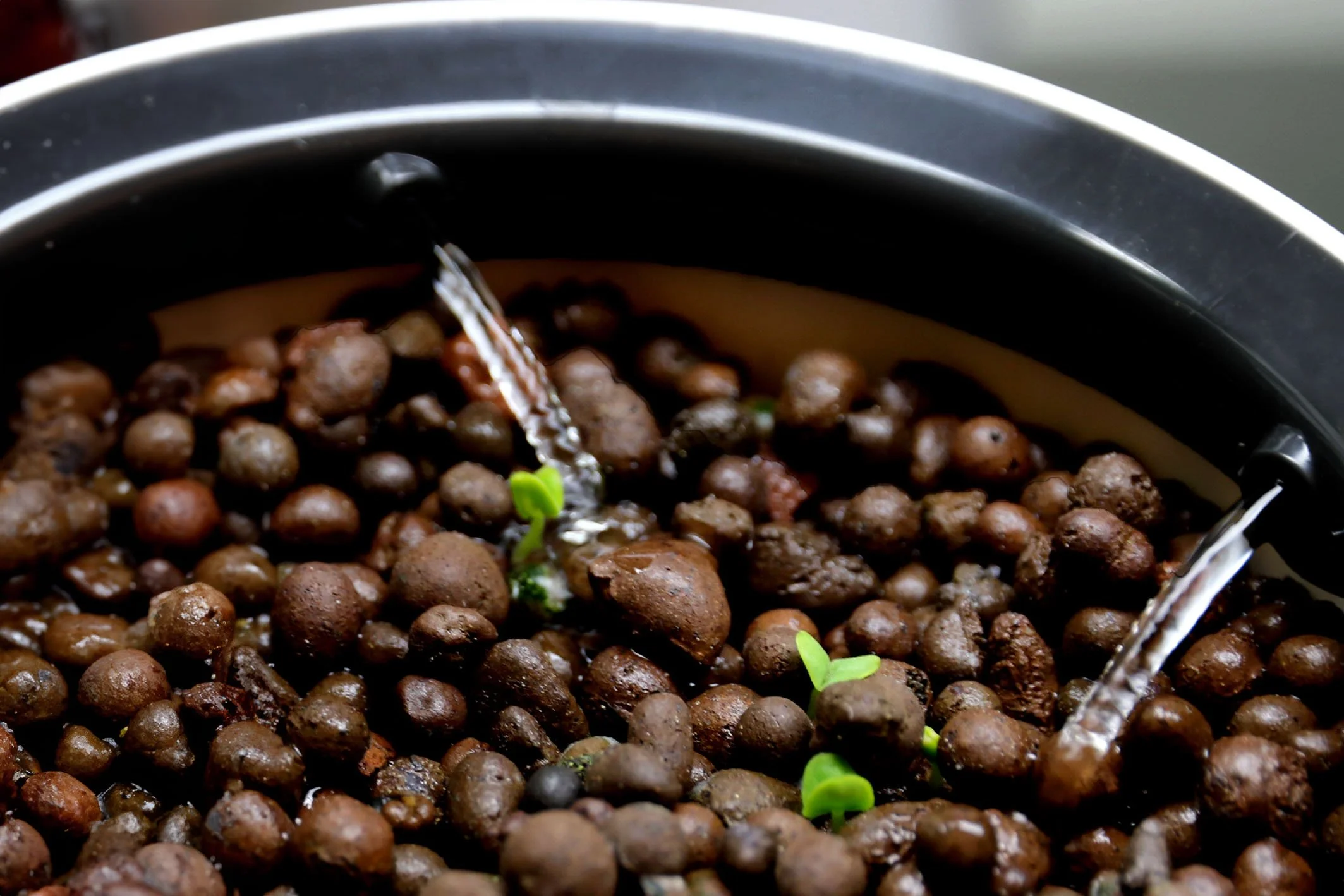
Growing without soil - i.e hydroponic - simplifies automation a lot.
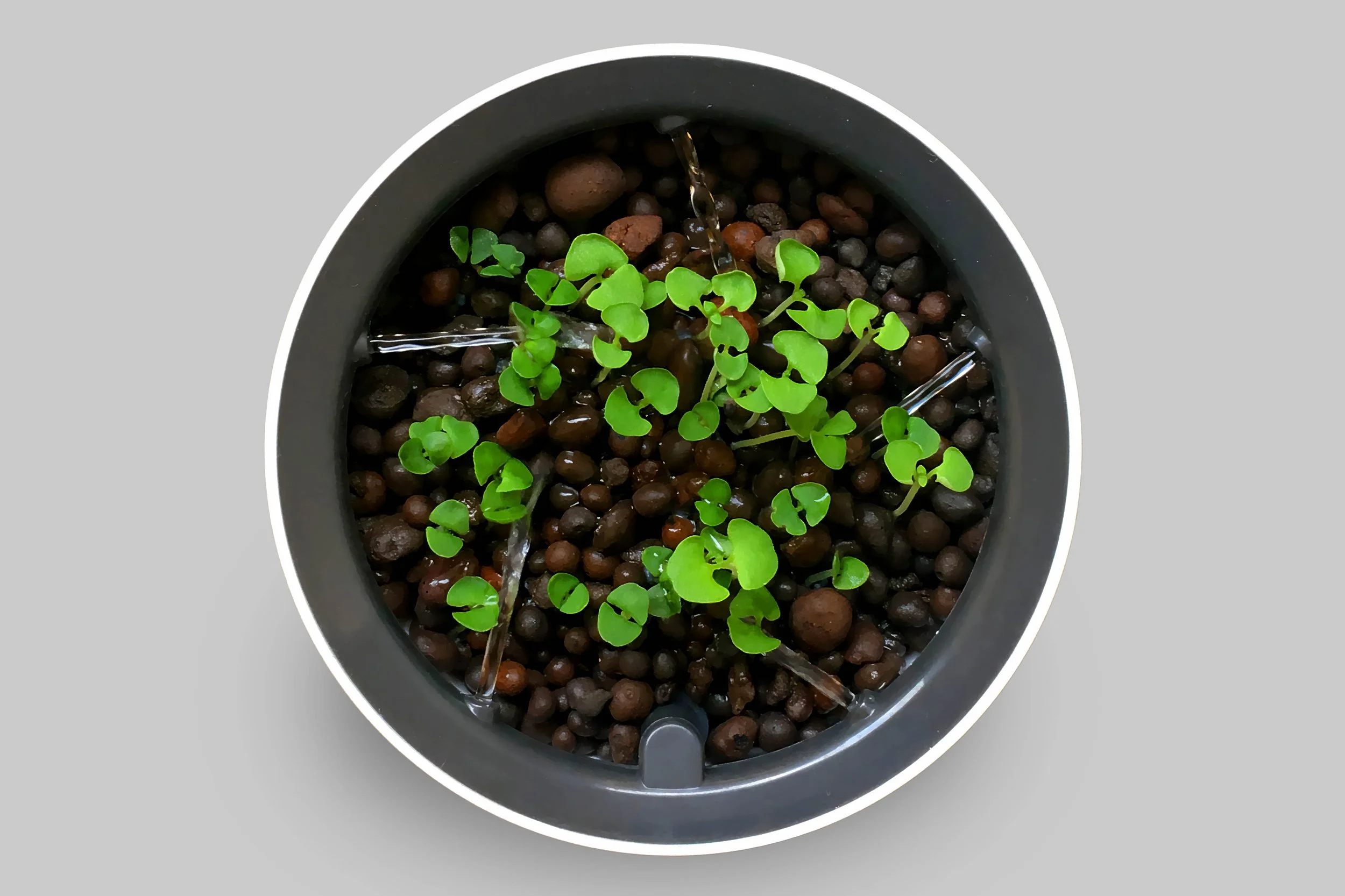
The Botanium actually overwaters the plant every time, but since the growing medium only absorbs a little amount of water the surplus drains back into the water tank to be reused later.
The constant presence of oxygen inside the coarse growing medium makes sure the roots never rot - something that would happen if soil was watered that frequently.
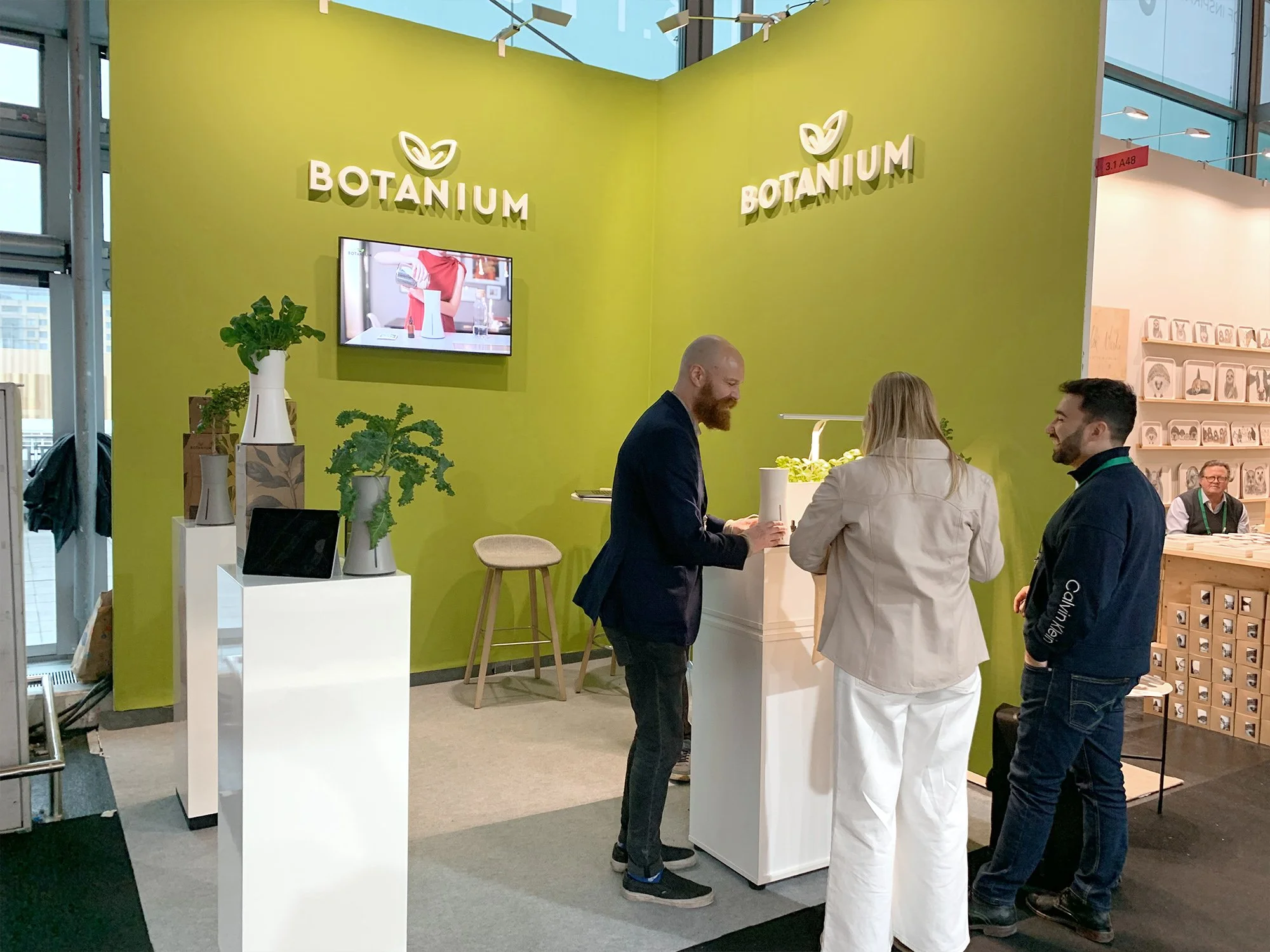
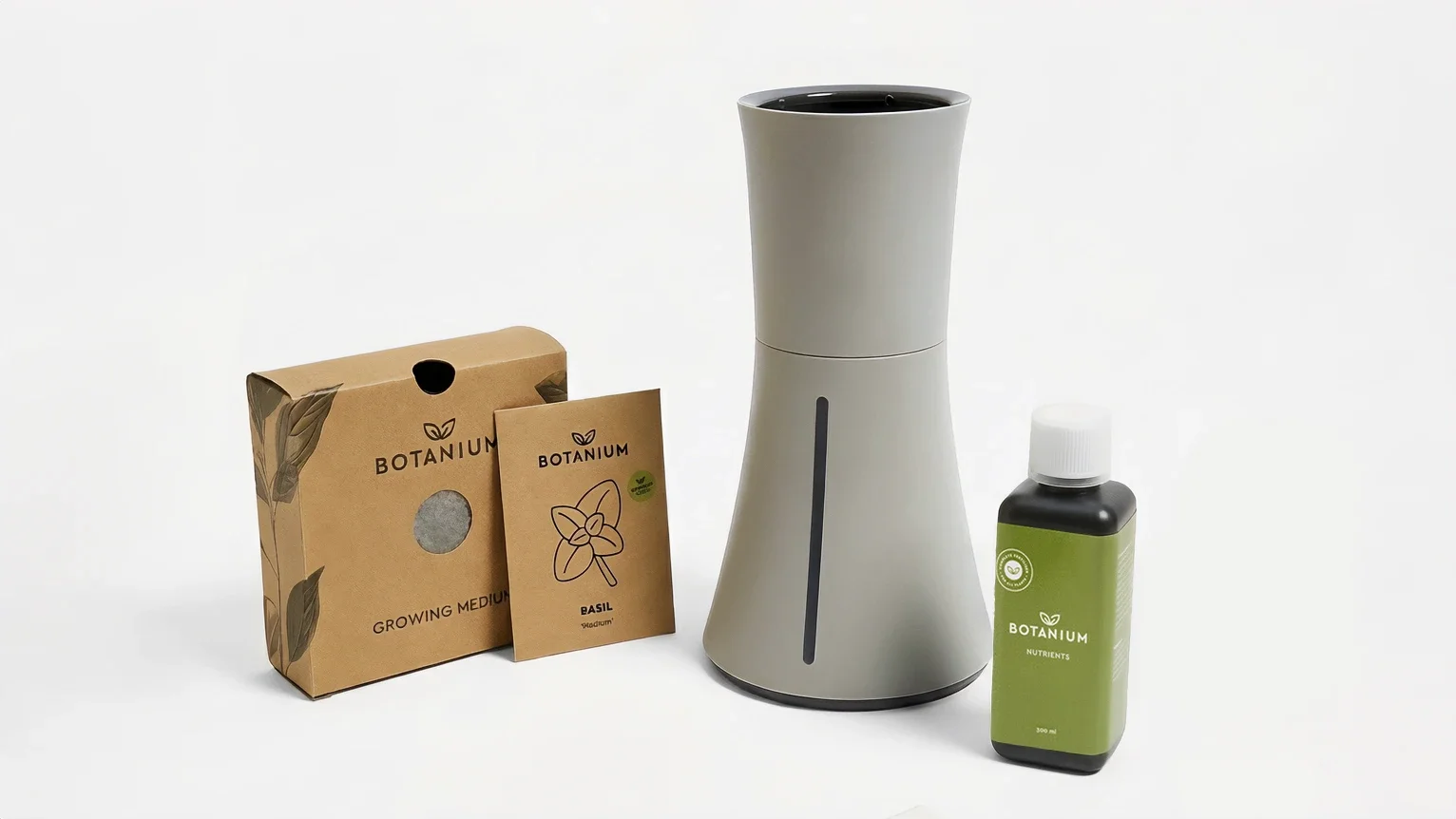
Botanium was mass-produced thanks to 1420 Kickstarter backers from 65+ countries. During the 30 day crowdfunding campaign in 2017, the project was funded with 1,1 M SEK, which made it possible to finance the expensive injection moulding tooling.
2000 units were shipped to these backers later that year.
Since then, the product has sold around 30 000 units worldwide.